The Durable Performance Brief Archive
Browse every published edition on organizational design, organizational effectiveness, drift, authority, incentives, accountability, consequence, execution, and durable performance.

Start with the strain you are trying to name.
The archive is designed for direct entry. Readers do not need to begin with the first edition or read the publication in sequence.
Find the Visible Pattern
Begin with the issue already present: slow decisions, weak ownership, filtered information, overload, approval drag, inconsistent standards, or recurring escalation.
Understand the Mechanism
Each edition moves beneath behavior to the incentives, authority, information, accountability, operating design, and consequences producing it.
Look for Repetition
Give greater weight to patterns that recur across people, teams, quarters, initiatives, or leadership changes.
Examine the Arrangement
Ask how decision rights, priorities, information, rewards, standards, handoffs, and coordination have been designed.
Evaluate the Result
Consider whether the current arrangement is improving or weakening decision quality, throughput, ownership, trust, adaptability, and correction.
Follow the Reading Path
Use the related concept, book, diagnostic, Field Guide, or resource to continue from recognition into deeper diagnosis and correction.
Each edition connects system arrangement with operating results.
The archive uses recognizable operating problems as entry points into the relationship between organizational structure and durable performance.
Organizational Design
Organizational design includes how authority, information, incentives, accountability, roles, priorities, standards, coordination, and operating mechanisms are arranged.
Brief editions help readers recognize how those arrangements can produce approval delays, filtered truth, weak ownership, competing priorities, protected exceptions, and execution drag.
Organizational Effectiveness
Organizational effectiveness reveals whether the operating system converts effort, information, authority, decisions, and resources into intended outcomes without excessive friction or dependence.
Brief editions examine early evidence that throughput, judgment, ownership, trust, adaptability, or correction capacity may already be weakening.
Use the archive as an entry point into the doctrine.
These foundational pages help place individual Brief topics within the wider structural-performance framework.
Performance Is Structural
Understand why repeated outcomes usually point to the conditions the system rewards, permits, delays, protects, or fails to correct.
Explore the core premise →Organizational Design
Examine how work, authority, information, incentives, accountability, priorities, and coordination are arranged.
Explore organizational design →Organizational Effectiveness
Evaluate what the current arrangement produces in capability, execution, adaptability, trust, ownership, and durable results.
Explore organizational effectiveness →Organizational Drift
See how softened standards, weakened authority, lingering exceptions, and delayed correction gradually change the system.
Explore organizational drift →Move from a single essay into the next useful layer.
The Brief names the pattern. These pathways support deeper study, practical diagnosis, and structural correction.
The Durable Performance Brief
Review the publication, subscribe by email or LinkedIn, and begin with the featured opening edition.
Visit the Brief →The Drift Diagnostic
Identify where organizational design, authority, incentives, information, accountability, or execution discipline may already be weakening.
Take the Diagnostic →The Book System
Explore the deeper frameworks, drift mechanics, failure patterns, leadership application, career application, and correction tools.
Explore the Books →The Field Guide
Turn structural recognition into scoring, worksheets, correction choices, guardrails, and recurring maintenance.
Explore the Field Guide →Resources
Access videos, diagnostics, essays, and practical materials that extend the structural-performance doctrine.
Explore Resources →The Durable Performance System™
See how organizational design, organizational effectiveness, authority, incentives, information flow, accountability, consequence, execution, and entropy fit together.
See the Complete System →Read The Durable Performance Brief.
Browse the archive below, beginning with the newest edition. Each entry should display its edition number, title, publication date, excerpt, and direct link.
-
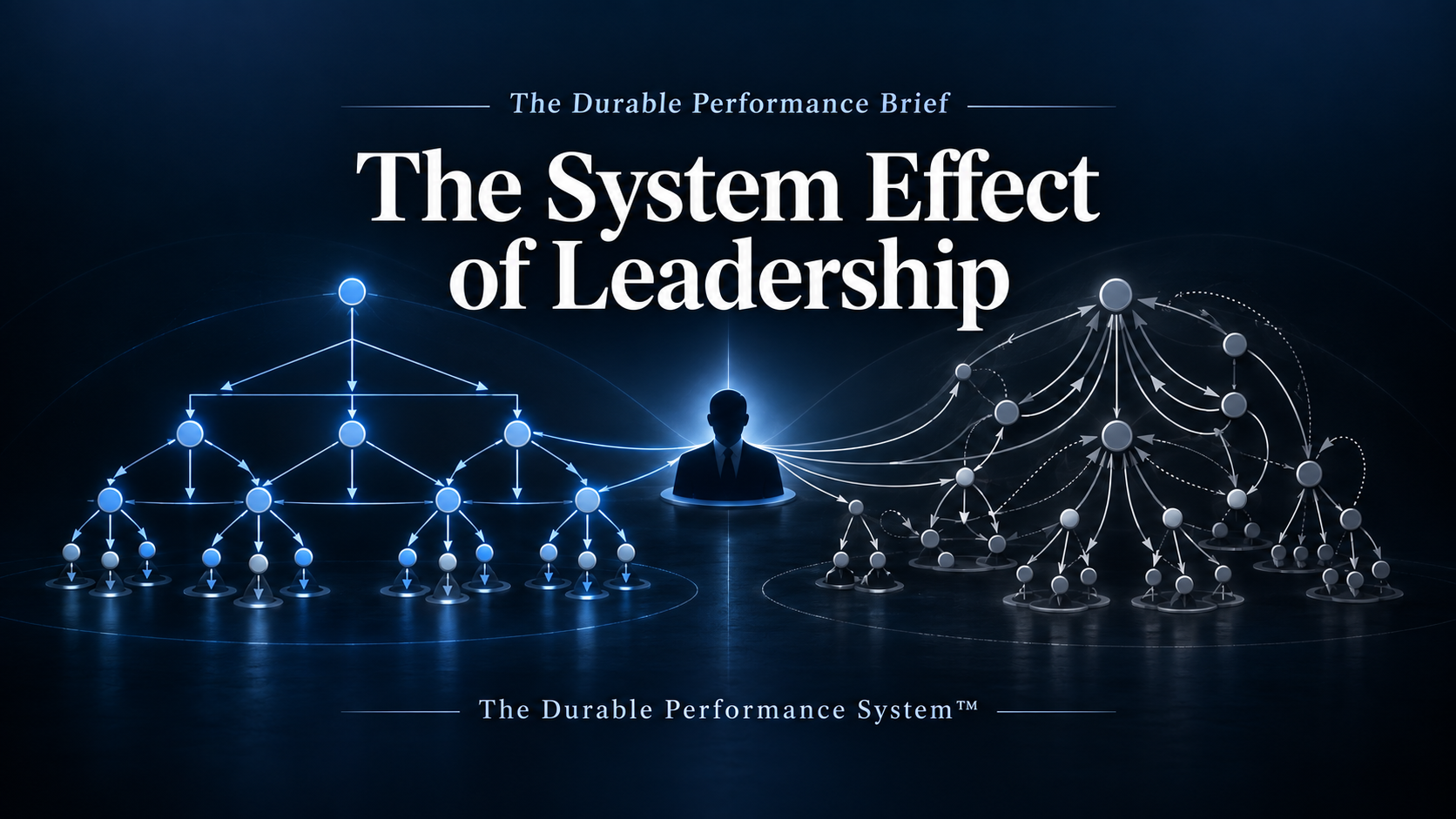
The System Effect of Leadership
Read this edition →: The System Effect of LeadershipA structural look at the system effect of leadership—and why leaders should judge themselves by what becomes more true around them, not simply by effort, intent, visibility, or…
-
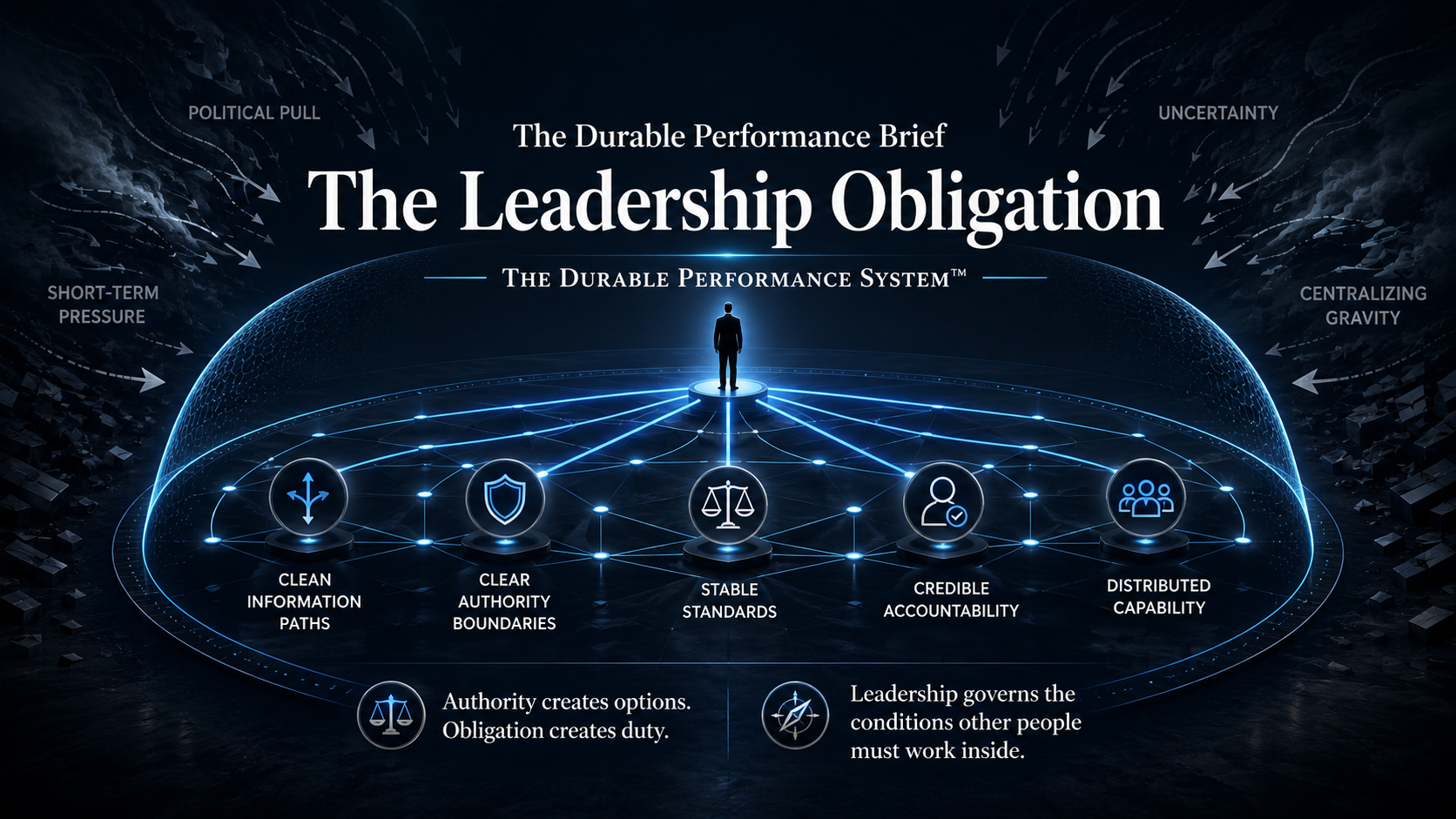
The Leadership Obligation
Read this edition →: The Leadership ObligationA structural look at the leadership obligation: acting before failure creates permission, protecting truth and standards, exercising self-restraint, and governing for the future condition of the system.
-

What Leaders Are Actually Responsible For
Read this edition →: What Leaders Are Actually Responsible ForA structural look at what leaders are actually responsible for—and why leadership should be judged by clearer authority, cleaner signal, credible standards, stronger capability, and system effect.
-

What Predictable Standards Make Possible
Read this edition →: What Predictable Standards Make PossibleA structural look at what predictable standards make possible—and how consistent enforcement strengthens managers, reduces political interpretation, and builds trust in the system.
-
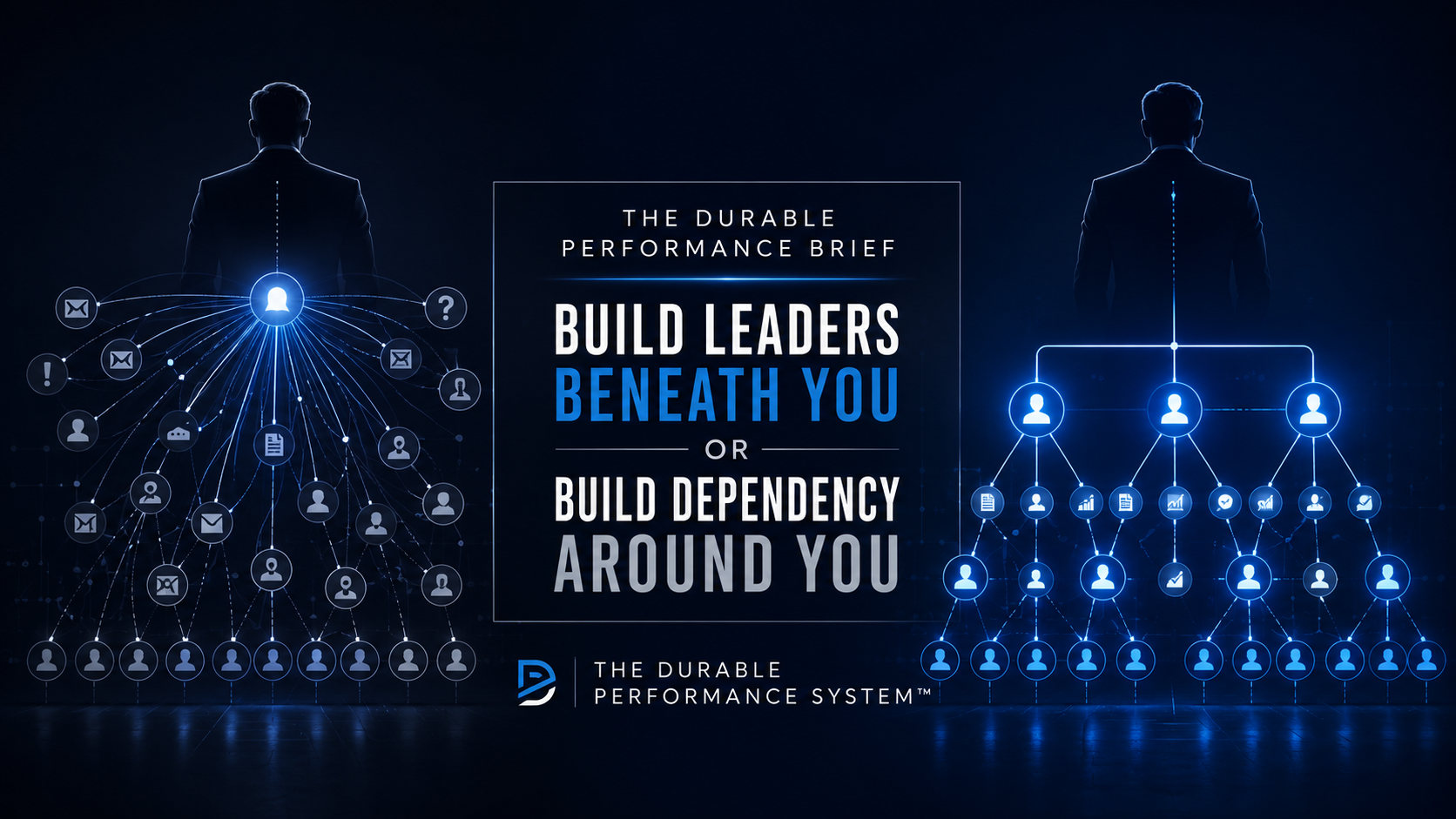
Build Leaders Beneath You or Build Dependency Around You
Read this edition →: Build Leaders Beneath You or Build Dependency Around YouA structural look at why strong leaders build capability beneath them, how well-intended involvement can create dependence, and what real leadership development requires.
-
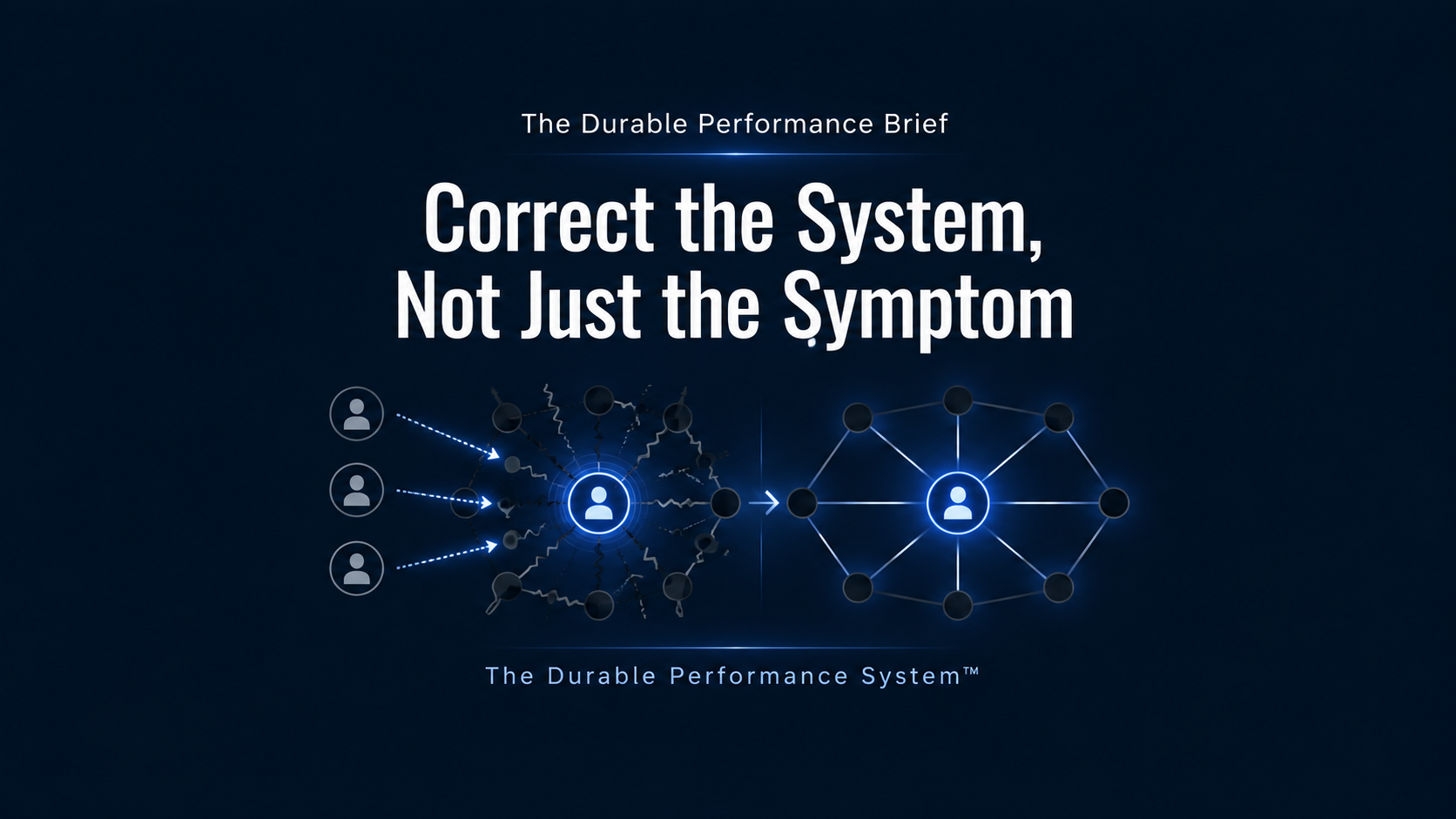
Correct the System, Not Just the Symptom
Read this edition →: Correct the System, Not Just the SymptomA structural look at why recurring problems survive coaching and personnel changes, and how leaders correct both the individual issue and the system producing it.
Use the Durable Performance Brief Archive to stay close to the doctrine.
Use the Brief to revisit the system in short, disciplined pieces. When an edition names what you are seeing, the diagnostic and books are the next step.