Curtis Stoaks
Curtis Stoaks is an author, operator, and creator of The Durable Performance System™. His work helps leaders understand how organizational design shapes organizational effectiveness, how structural drift weakens execution, and how operating systems quietly change what an organization becomes.

Writing about structural performance.
Curtis’s work is built around a simple operating premise: recurring performance problems usually persist because the structure permits them. Durable performance requires clearer authority, cleaner signal, aligned incentives, mature accountability, meaningful consequence, and deliberate organizational design.
A Connected Doctrine
A unified body of work about organizational design, effectiveness, drift, authority, incentives, accountability, consequence, and execution.
See the system →Organizational Design
Clear language for understanding how structure, decision rights, incentives, information, accountability, and coordination are arranged.
Explore organizational design →Organizational Effectiveness
A structural way to evaluate whether the organization produces the right outcomes without relying on overload, rescue, or hidden fragility.
Explore organizational effectiveness →Practical Entry Points
Diagnostics, books, Brief editions, and applied resources designed for real operating environments.
Explore resources →Executive Relevance
Clear language for leaders dealing with structural drag, weak ownership, distorted accountability, and slower execution.
Explore leadership systems →Performance Is Structural
The central principle that repeated outcomes reflect what the operating system rewards, permits, protects, delays, or fails to correct.
Explore the principle →Operating experience behind the work.
Curtis writes from direct experience across customer service, sales, training, enablement, coaching, and leadership in high-volume, customer-focused environments.
His work reflects years spent improving readiness, building KPI and reporting structures, strengthening accountability, protecting revenue during periods of change, and helping teams perform with greater clarity under pressure.
That experience provided a practical view of how organizational design affects decision-making, information flow, ownership, execution, and the organization’s ability to sustain results.
Less theater. More operating reality.
That experience shaped the central orientation of the work: less abstraction, more operating reality; less performance theater, more structure, consequence, and disciplined correction.
The goal is to make structural patterns visible early enough that leaders can correct them before they harden into normal operating behavior.
Organizational effectiveness should be judged not only by whether a target was reached, but by what the system had to consume to reach it and whether the result can continue.
Design establishes the conditions. Effectiveness reveals the result.
Two broad organizational ideas provide familiar entry points into Curtis’s wider body of work.
Organizational Design
Organizational design includes more than reporting lines. It includes how work moves, where decisions belong, which information reaches leadership, what behavior is rewarded, how accountability operates, and how coordination is managed.
Curtis’s work examines the operating consequences of those choices and how apparently reasonable additions can gradually create friction, dependence, and drift.
Organizational Effectiveness
Organizational effectiveness examines whether the current system reliably produces the outcomes the organization exists to deliver while preserving capability, trust, adaptability, and execution.
Curtis’s work distinguishes durable effectiveness from results that depend on chronic overwork, senior-leader intervention, filtered signal, selective accountability, or repeated rescue.
Organizations weaken when structure shifts.
Authority moves upward under pressure. Information gets compressed. Exceptions remain after the moment that justified them passes. Accountability becomes selective. Consequence softens.
These changes rarely look dramatic at first. They look reasonable, temporary, and easy to explain. Over time, however, they alter organizational design and reduce organizational effectiveness.
Curtis’s work is designed to help leaders recognize that movement before it becomes the operating system.
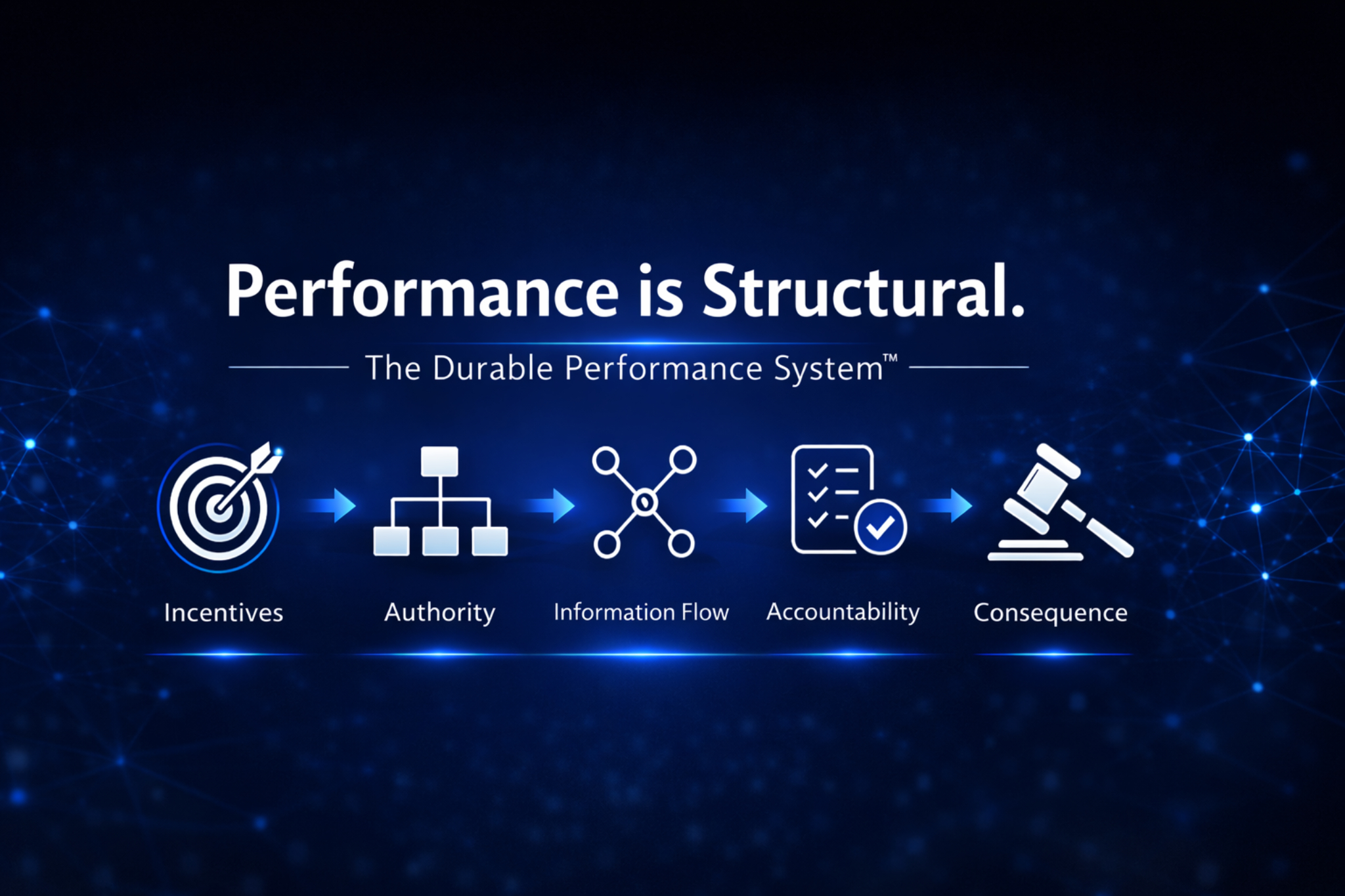
Performance is structural.
The Durable Performance System™ examines how incentives, authority, information flow, accountability, and consequence shape behavior over time.
The system provides the complete framework. Curtis’s books, diagnostics, essays, and videos apply that framework to the problems leaders and employees can already see.
When different people repeatedly encounter the same barriers, delays, distortions, or ownership failures, the pattern should be treated as structural data.
Books, essays, diagnostics, and video built around one doctrine.
Readers can begin with the problem they already recognize, then move into deeper explanation, applied correction, and recurring insight.
Books
Five primary entry points into The Durable Performance System™, supported by two related works on leadership and career behavior.
Explore the catalog →The Durable Performance Brief
Concise structural essays on design, effectiveness, drift, authority, incentives, accountability, consequence, leadership, and execution.
The Drift Diagnostic
A practical starting point for identifying authority drift, signal distortion, execution friction, weak accountability, and structural drag.
Take the diagnostic →YouTube
Short- and long-form explanations of the doctrine, organizational design, effectiveness, structural diagnostics, and leadership systems.
Visit the channel →Follow or read Curtis Stoaks on the platform you use.
These links lead only to official Curtis Stoaks profiles or platforms hosting Curtis Stoaks-owned content.
Follow professional updates, structural-performance posts, and current work.
Follow on LinkedIn →Follow visual summaries, structural-performance ideas, and publishing updates.
Follow on Instagram →Organizations do not drift because leaders stop caring. They drift because enforcement weakens and systems adapt accordingly.
Start with the work most relevant to you.
Explore the system for the complete framework, organizational design and effectiveness for the broad operating relationship, the books for deeper explanation, or the contact page for a specific question.