The books work as a system.
The catalog is built around five primary entry points into The Durable Performance System™, supported by two related works that apply the doctrine to leadership and career behavior. Together, the books explain how organizational design shapes organizational effectiveness and why durable performance must be built structurally.
Use the title that fits the current need.
The books do not require a fixed reading order. Each primary title stands on its own, while the two related works apply the doctrine directly to leadership and career behavior.
Across the catalog, organizational design explains how the operating system is arranged, while organizational effectiveness reveals what that arrangement consistently produces.
Structural Architecture
Choose the architecture title for the broadest view of the doctrine, how the structural forces fit together, and how design shapes durable outcomes.
Explore the architecture →Pattern and Drift Diagnosis
Choose a pattern, subtraction, or drift title when you need clearer language for what is weakening and why the same problems continue.
Compare the primary entry points →Applied Correction
Choose the Field Guide when the immediate need is diagnosis, scoring, friction removal, structural correction, and improved organizational effectiveness.
Explore the Field Guide →Leadership and Career Application
Choose the leadership or employee title when the central question concerns how people operate, decide, adapt, and advance inside the system.
See the related works →Enter the system through the problem already in front of you.
Together, these books move through failure-pattern awareness, disciplined subtraction, drift mechanics, structural architecture, and applied correction.
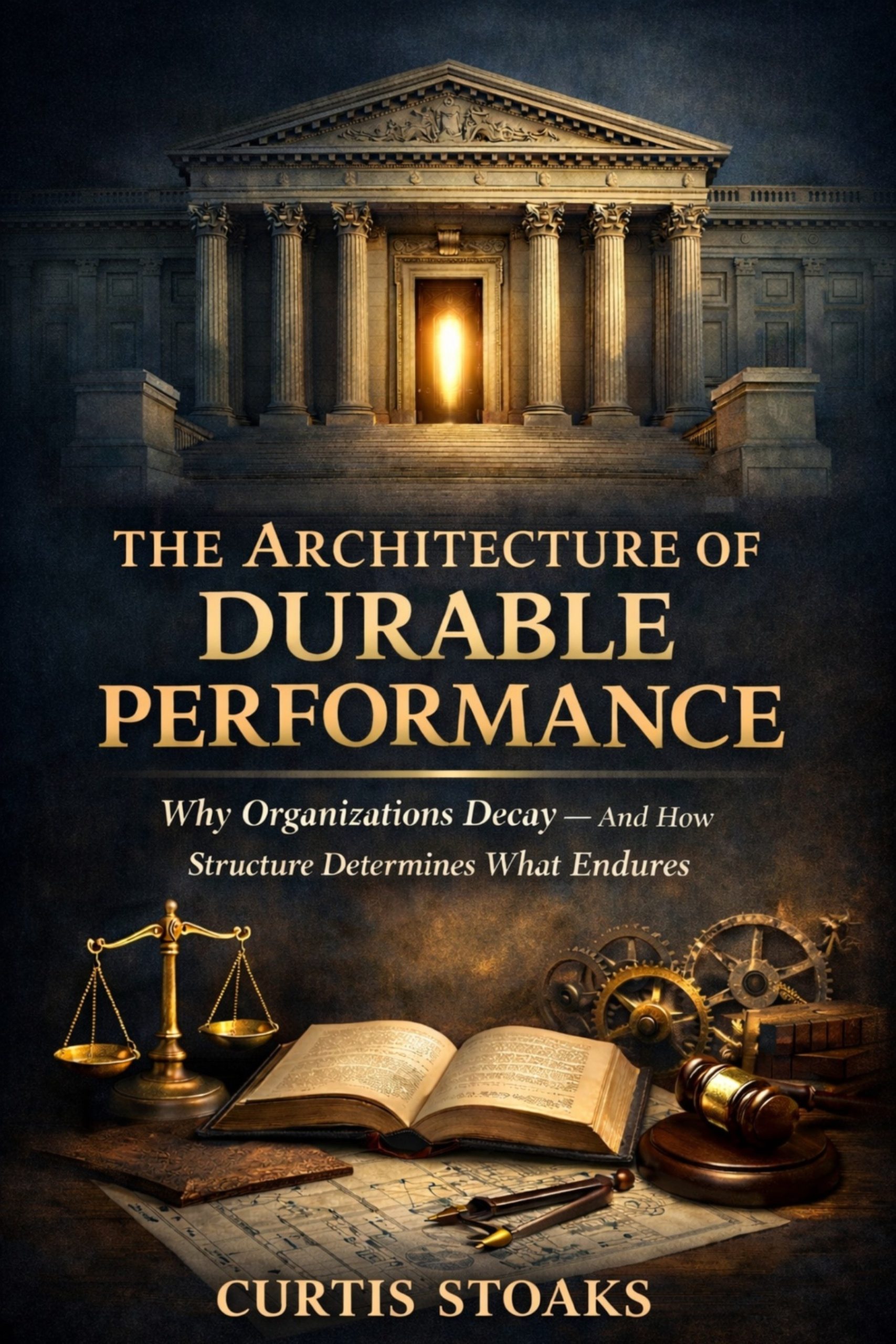
The Architecture of Durable Performance
The integrating framework for the system and the clearest place to understand how structure shapes outcomes, how entropy builds, and why durability must be designed deliberately.
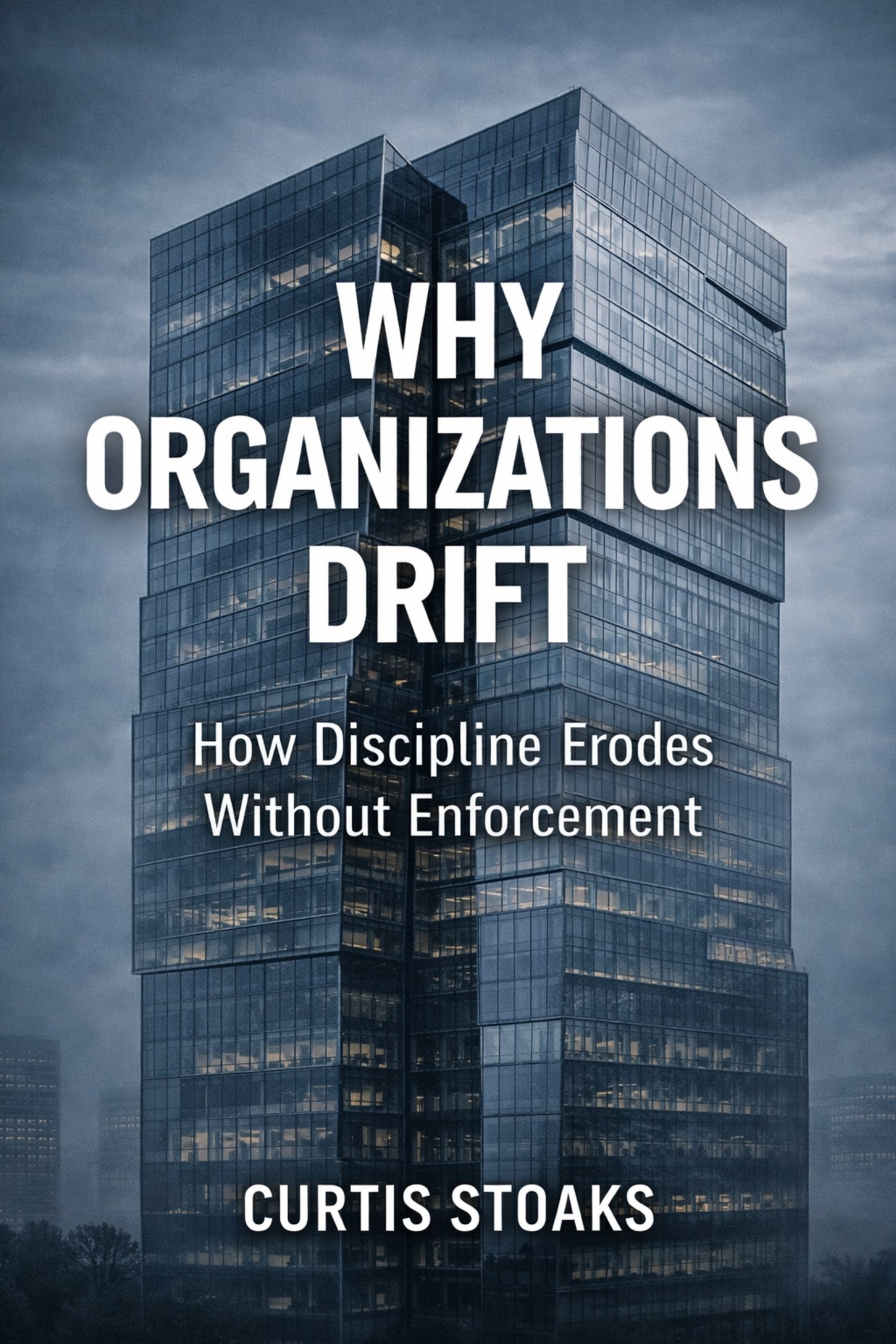
Why Organizations Drift
A focused study of weakened enforcement, tolerated exceptions, and the quiet decay that takes hold before decline becomes obvious to leadership.

What Smart Companies Stop Doing
A structural look at disciplined subtraction, showing why better performance often depends on what organizations stop protecting, stop adding, and stop tolerating.
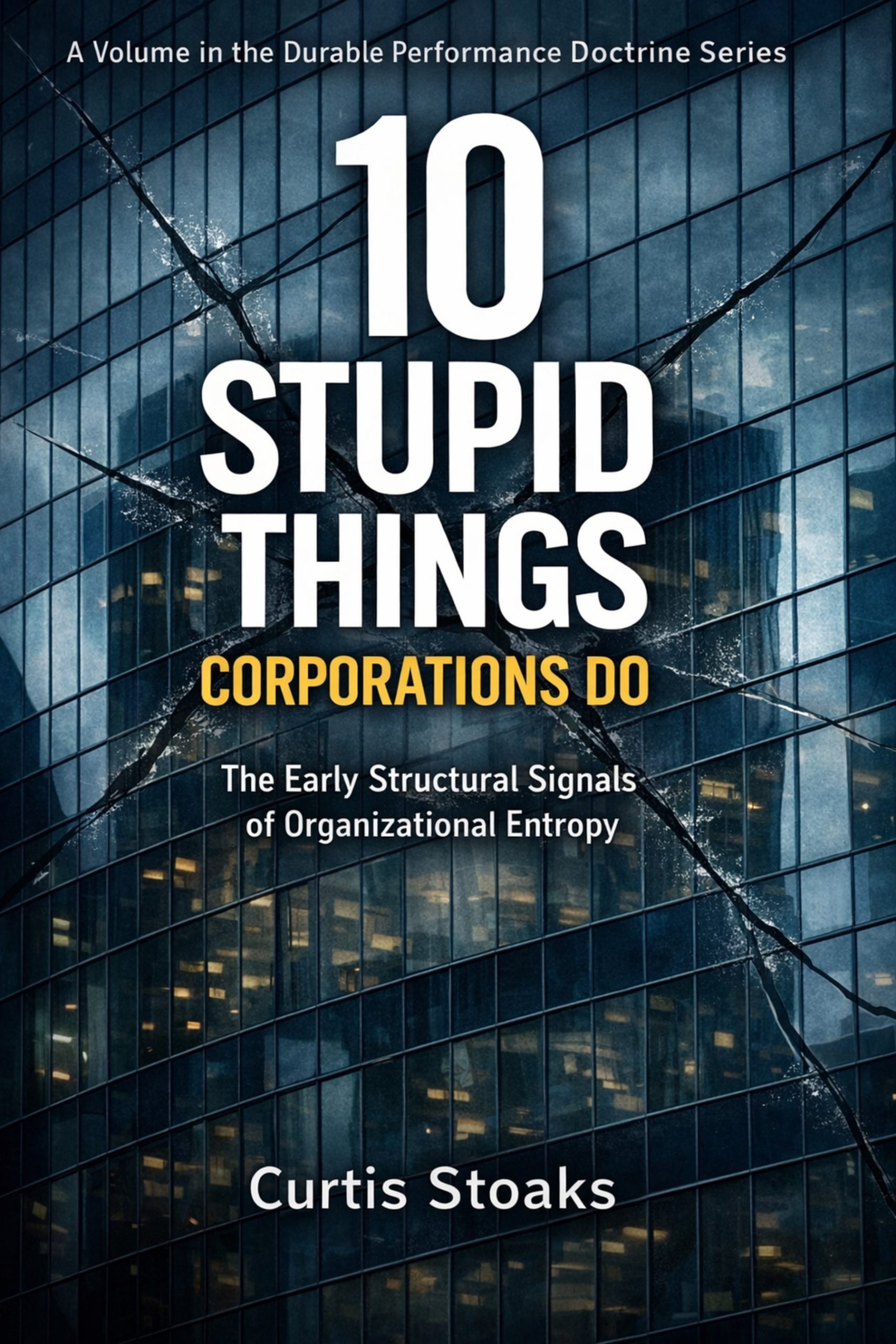
10 Stupid Things Corporations Do
A blunt look at the failure patterns organizations normalize long before visible decline makes them impossible to ignore.

The Durable Performance Field Guide
An applied workbook for leaders who need to diagnose distortion, reduce friction, and restore structural clarity through disciplined action.
Apply the doctrine to leadership and career behavior.
These books are connected to the system but serve a different role. They translate the doctrine into the decisions, behaviors, and interpretations that shape leaders and employees inside organizations.
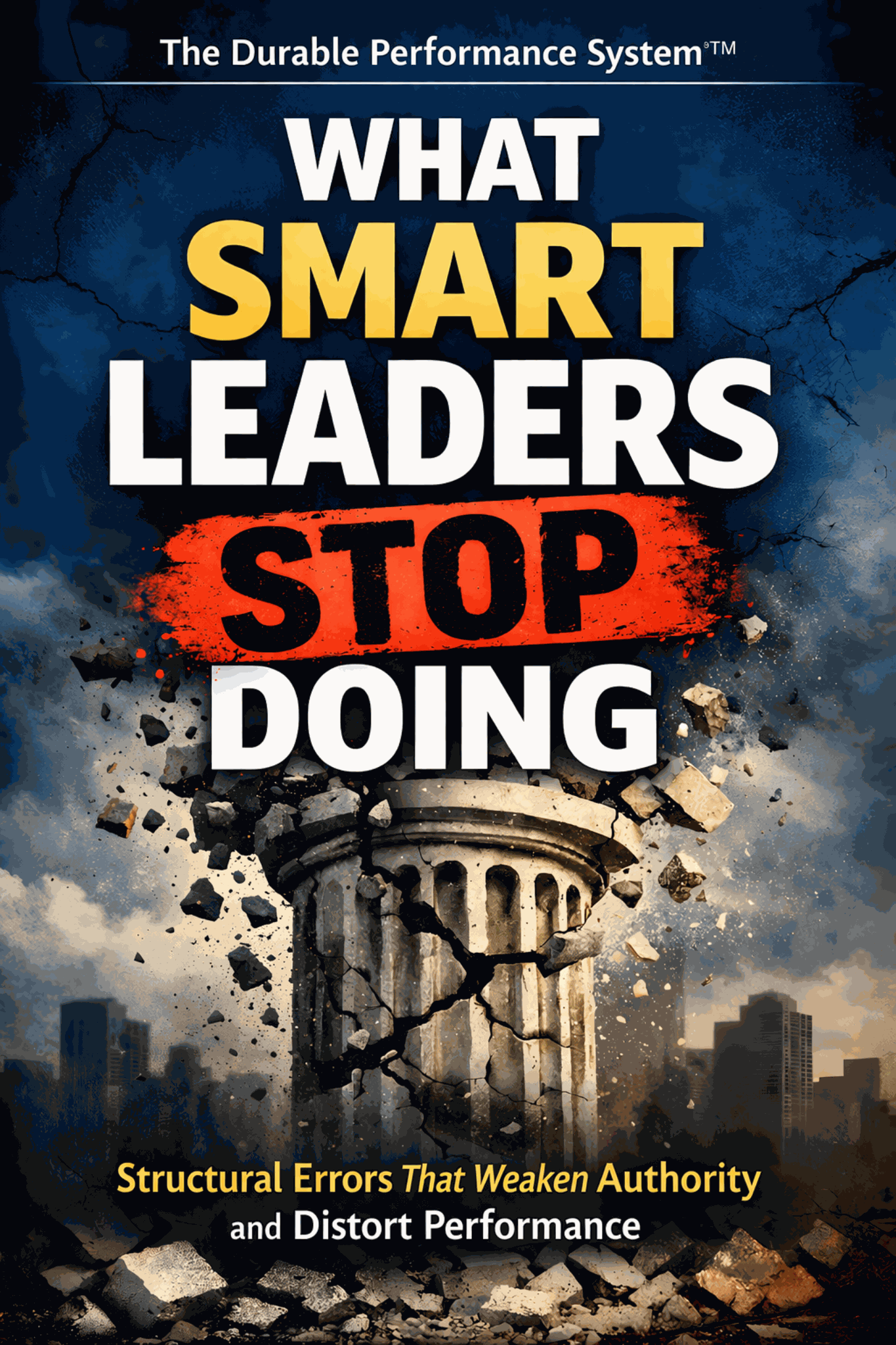
What Smart Leaders Stop Doing
A structural study of leadership error, showing how capable leaders can weaken systems through habits that feel responsible in the moment.

What Smart Employees Stop Doing
A practical look at how careers actually advance inside organizations, with clearer language for judgment, effort, visibility, leverage, and risk.
Concepts behind the books
These pages explain the broader organizational terms and structural doctrine that appear throughout the catalog.
Organizational Design
How structure, work, decision rights, incentives, information, accountability, and coordination are deliberately arranged.
Read more →Organizational Effectiveness
How reliably an organization produces intended outcomes while preserving capability, adaptability, and durable performance.
Read more →Authority Design
How decision rights, approval paths, and escalation rules shape execution.
Read more →Signal Integrity
How operational reality reaches leadership without filtration, delay, or narrative protection.
Read more →Incentive Architecture
How rewards, protections, recognition, and consequence teach the organization what matters.
Read more →Structural Simplicity
How removing unnecessary complexity protects attention, decision speed, and execution.
Read more →Move from the books into doctrine, tools, essays, and video.
Use the pathway that best supports the next question.
See the System
Understand how organizational design, effectiveness, authority, incentives, information flow, accountability, and consequence fit together.
Explore the doctrine →Use the Resources
Access the Drift Diagnostic, practical tools, previews, and applied structural-performance resources.
View resources →Read the Brief
Follow concise structural essays and use the archive as a growing doctrine library.
Watch on YouTube
See short- and long-form explanations of organizational design, effectiveness, structural performance, leadership systems, execution drag, and authority.
Visit the channel →Explore the catalog.
Begin with the title that best matches the problem, question, or level of application in front of you.