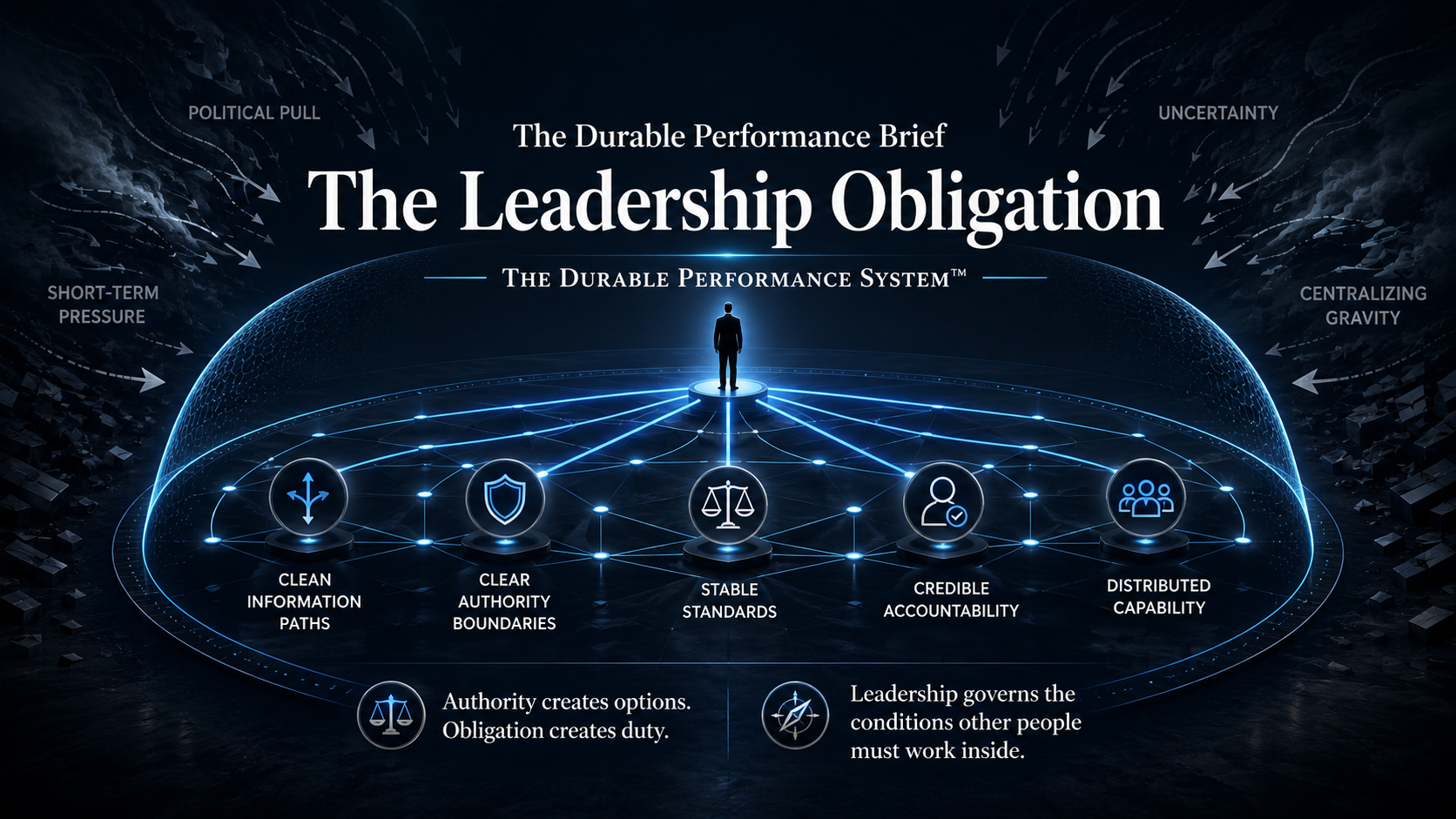
Edition 24 | September 2, 2026
Publish: Wednesday, September 2, 2026 — 7:00 AM Mountain Time
Leadership is often described in the language of opportunity.
More influence.
More scope.
More visibility.
More authority.
A larger voice in what happens next.
Those things may come with the role.
They are not the center of it.
The center is obligation.
The obligation to govern conditions other people cannot fully govern for themselves. The obligation to act when structural drift is visible even when failure has not yet created enough pain to make action popular. The obligation to protect truth, standards, legitimate authority, and future capability when doing so makes the present moment harder.
The Core Thesis
Leadership is not a privilege arranged around authority.
It is an obligation arranged around consequence.
The more authority a leader holds, the more their choices shape the operating environment other people have to inhabit.
A delayed correction teaches.
An exemption teaches.
An executive intervention teaches.
A truth that cannot be spoken directly teaches.
A manager who is asked to hold a standard but is abandoned when enforcement becomes politically difficult learns something.
So does everyone watching.
This is why leadership has to be understood as custodial before it is expressive.
The role is not primarily a platform for demonstrating style, confidence, vision, charisma, or decisiveness.
It is stewardship of the structural conditions under which other people must work.
See how Leadership Systems turn repeated leader behavior into operating structure.
Obligation Begins Before Failure
One of the easiest ways to avoid leadership responsibility is to wait until the evidence becomes undeniable.
Once the customer is lost, the manager resigns, the project fails, the numbers collapse, or the corrosive behavior becomes publicly impossible to defend, action becomes easier.
Now there is permission.
The danger is obvious.
People expect intervention.
The political cost of doing nothing becomes higher than the cost of acting.
But durable leadership often has to move earlier.
When the pattern is clear enough to know where the system is heading, even though the organization can still tolerate it.
That is a different standard.
Reaction waits for pain.
Obligation acts when responsibility becomes sufficiently clear.
This is particularly important with Organizational Drift. Drift rarely arrives as a single undeniable event. It advances through individually defensible accommodations that become precedent through repetition.
The Obligation to Restrain Yourself
Not every leadership obligation requires action.
Some require restraint.
That may be harder.
A senior leader can enter a decision because they know the answer.
They can ask for another update because uncertainty is uncomfortable.
They can rescue a manager because watching someone struggle feels inefficient.
They can soften a consequence because the person involved is valuable.
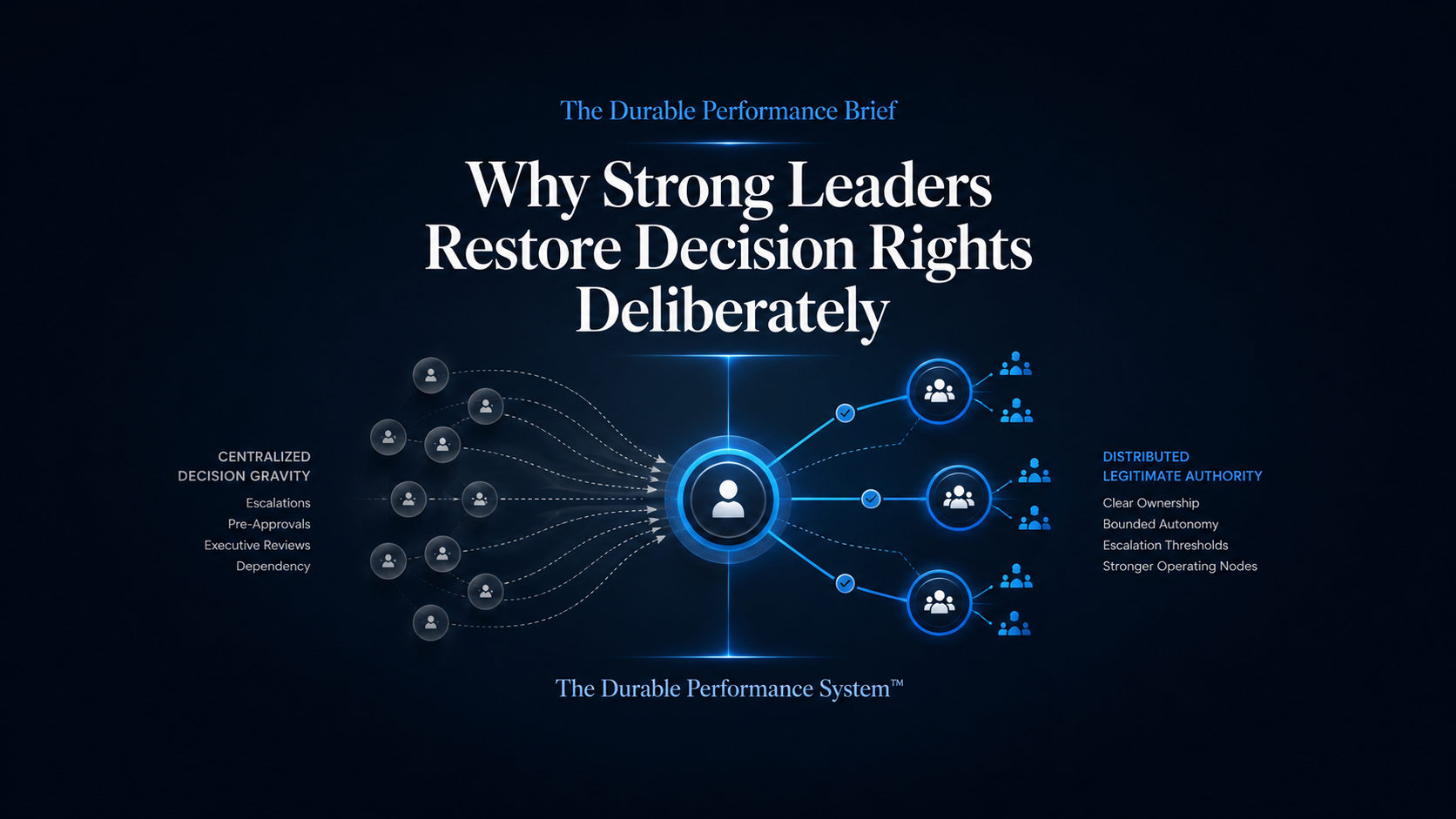
They can keep a decision centralized because distributed judgment creates variance.
Every one of those moves can feel responsible.
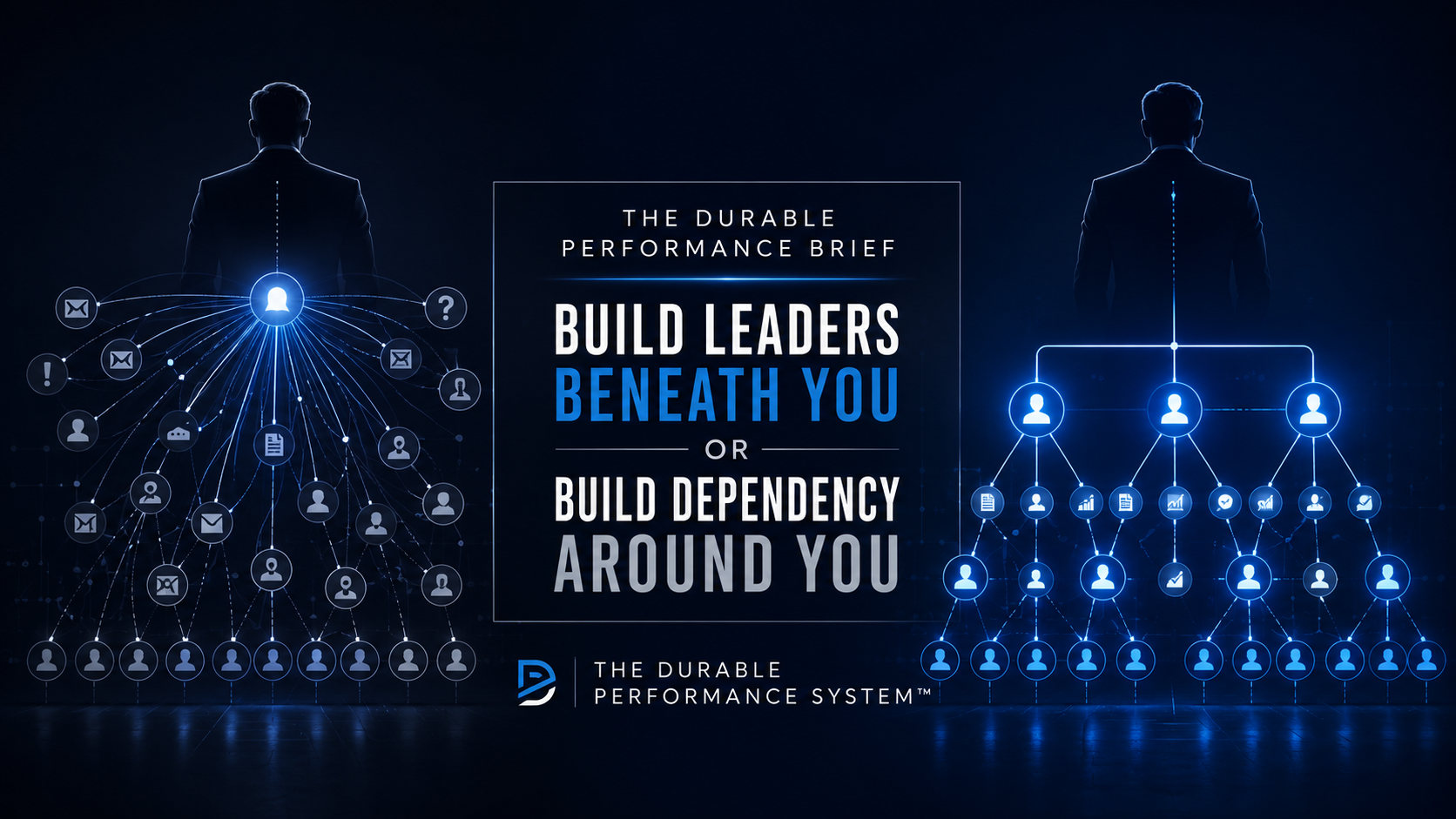
Every one can also make the system more dependent on the leader.
This is why power creates an obligation to understand your own capacity to distort.
Sometimes leadership means acting.
Sometimes it means refusing to recenter what should remain local.
Refusing to rescue too soon.
Refusing to ask for reassurance disguised as visibility.
Refusing to convert every uncomfortable situation into executive involvement.
Refusing to let your own need for certainty redesign the operating system around you.
That is not passivity.
It is disciplined authority.
The Obligation to Protect Truth
Truth inside organizations is fragile.
It gets packaged.
Sequenced.
Softened.
Contextualized.
Delayed.
Sometimes because people are dishonest.
More often because they are rational.
They learn how leadership responds.
If early bad news creates blame, people wait.
If disagreement creates political cost, people soften.
If executive confidence matters more than operating reality, people learn to protect confidence.
Soon leadership receives more information and less truth.
That makes Signal Integrity a leadership obligation, not merely a communication issue.
The leader is responsible for whether operating reality can arrive early enough, clearly enough, and safely enough to be useful.
You cannot demand candor while punishing the conditions that produce it.
The Obligation to the People Closest to the Work
Leadership also owes something downward.
Not comfort.
Not protection from the normal difficulty of serious work.
Something more operational.
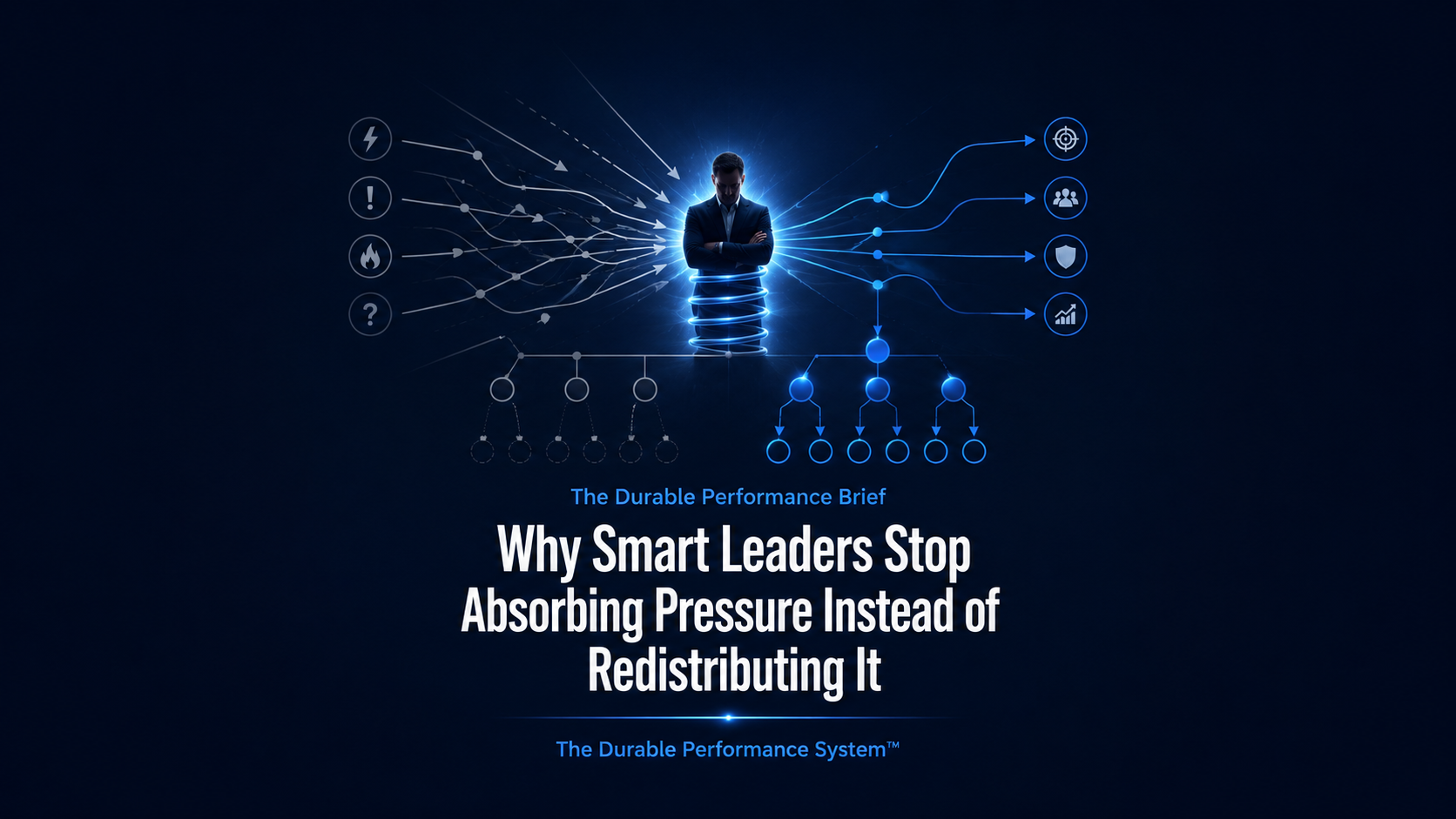
People closest to the work should not have to carry unnecessary distortion created above them.
They should not be given responsibility without usable authority.
They should not have to disguise truth to make it survivable.
Managers should not be expected to enforce standards senior leaders will abandon when someone powerful resists.
Disciplined people should not be required to compensate indefinitely for tolerated dysfunction.
Local judgment should not have to survive inside permanent ambiguity.
This is not sentimental leadership.
It is what the book describes as operational justice: the recognition that people below cannot fully redesign the architecture above them, while leadership can.
That asymmetry creates obligation.
The Obligation to Future Conditions
Weak leadership often optimizes for the current room.
How do we keep this calm?
How do we avoid unnecessary disruption?
How do we protect the quarter?
How do we preserve confidence?
The stronger question is:
What does this become if we repeat it?
What precedent does this exception establish?
What behavior does this protection finance?
What becomes harder to correct six months from now?
What future system are we creating by choosing present comfort?
That is the time horizon leadership has to hold when others cannot.
Because one of the most dangerous organizational trades is exchanging future integrity for present smoothness while calling the trade maturity.
This is where Accountability Design becomes important. A standard is only credible when authority, evidence, correction, and consequence remain coherent when applying them becomes expensive.
One Practical Diagnostic
Ask this in your next leadership meeting:
What structural duty do we already know is ours but keep postponing because acting now is expensive?
Then ask:
- What truth has become clear enough to act on?
- What standard is louder in language than in consequence?
- What authority remains centralized mainly because returning it feels risky?
- What are people below us compensating for that they cannot redesign themselves?
- What present accommodation is creating tomorrow’s precedent?
- Where are we waiting for failure to create permission we already have?
Those questions separate difficulty from obligation.
Some difficult things are not yours to carry.
Some obligations cannot responsibly be transferred to anyone else.
If You Change One Thing This Week
Identify one decision you already know leadership has an obligation to make.
Not an idea to study.
Not an issue to keep watching.
Something whose structural direction is already clear.
Then define:
What must be named?
What must change?
Who must own the correction?
What consequence or boundary makes the correction real?
By when?
Do not make it dramatic.
Make it explicit.
Leadership obligation is not measured by how severe the action appears.
It is measured by whether the system receives the correction before drift makes that correction harder, more political, and more expensive than it needed to be.
Go Deeper
This issue builds on ideas from What Smart Leaders Stop Doing, part of The Durable Performance System™ series.
Related read:
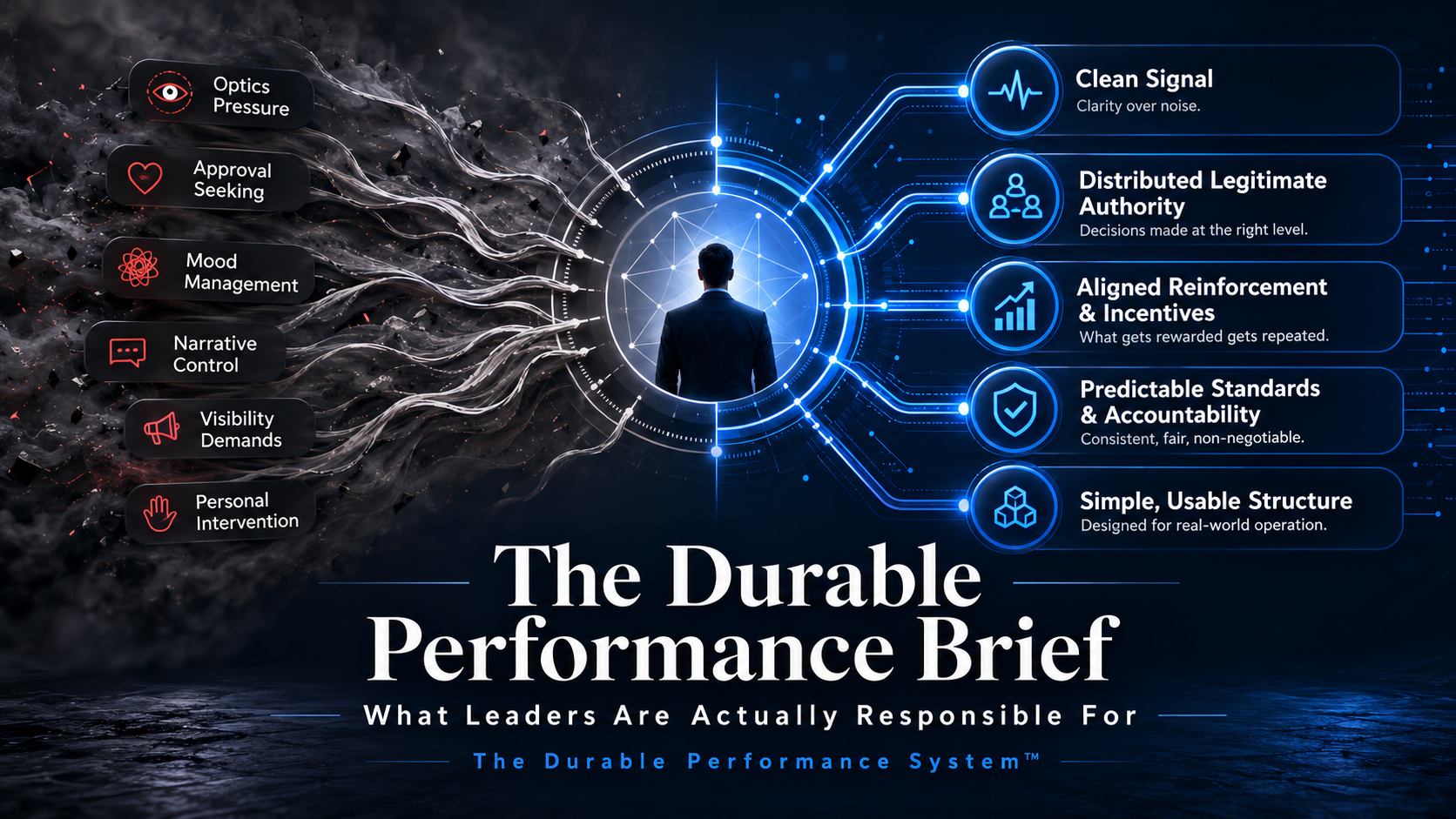
What Smart Leaders Stop Doing examines leadership as structural responsibility rather than personal expression. Its final leadership standard moves from what leaders are responsible for, to the obligation those responsibilities create, and ultimately to the system effect by which leadership should be judged.
Closing Thought
Leadership is not made serious by the title.
It becomes serious when duty becomes clearer than self-interest.
When truth matters more than reassurance.
When future integrity matters more than present calm.
When the standard matters even when enforcement costs something.
When the leader knows when to act—and when to restrain themselves.
Authority gives leaders options.
Obligation tells them which options they can no longer responsibly avoid.
Question for readers: What leadership obligation in your organization is already clear but still waiting for failure to make action easier?
Next Wednesday: The system effect of leadership.
Part of The Durable Performance System™
Books, field guides, and frameworks on power, incentives, authority, accountability, and execution.
Published every Wednesday morning.
Curtisstoaks.com – YouTube – @curtisstoaksauthor