Edition 15 | July 1, 2026
A lot of leaders become indispensable for the wrong reason.
They absorb too much.
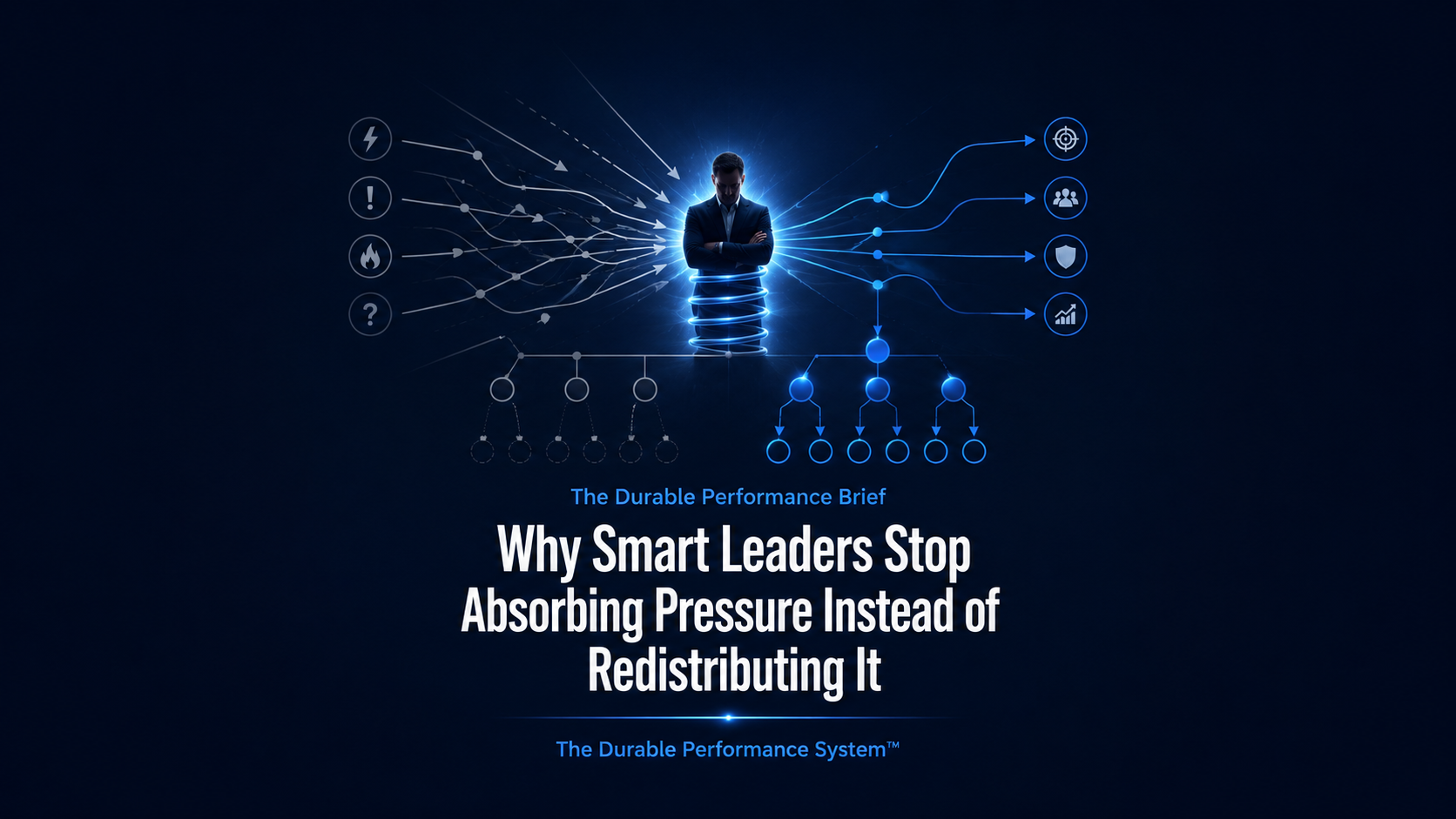
That pattern is easy to praise. The leader takes the difficult call, carries the political strain, smooths the cross-functional conflict, calms the customer issue, translates the ambiguity, and keeps the system moving. In the short term, this can look like strength. It often is a strength. The problem begins when personal endurance becomes the operating design. Then, pressure stops teaching the system how to grow and starts teaching it where to send everything hard.
The Core Thesis
Pressure cannot always be eliminated.
But it can be distributed differently.
That is the real leadership question. Not: How much pressure can I personally carry? But: What should this pressure teach the system to become? When leaders absorb too much strain themselves, they create temporary relief without building future strength. When they redistribute pressure well, they use the moment to create clearer decision rights, sharper escalation boundaries, stronger managers, better local judgment, and more durable ownership beneath them.
That difference matters because teams are adaptive.
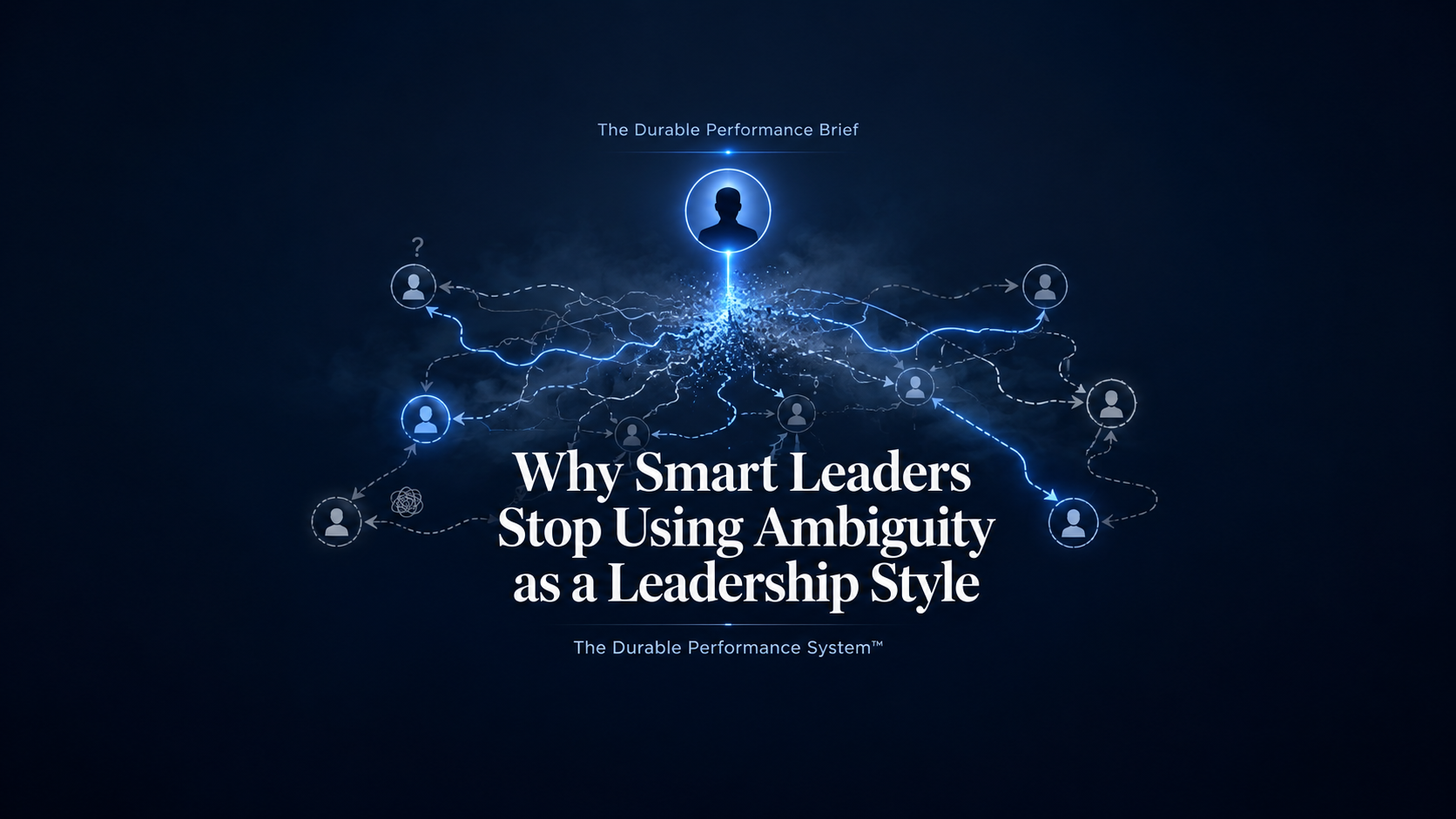
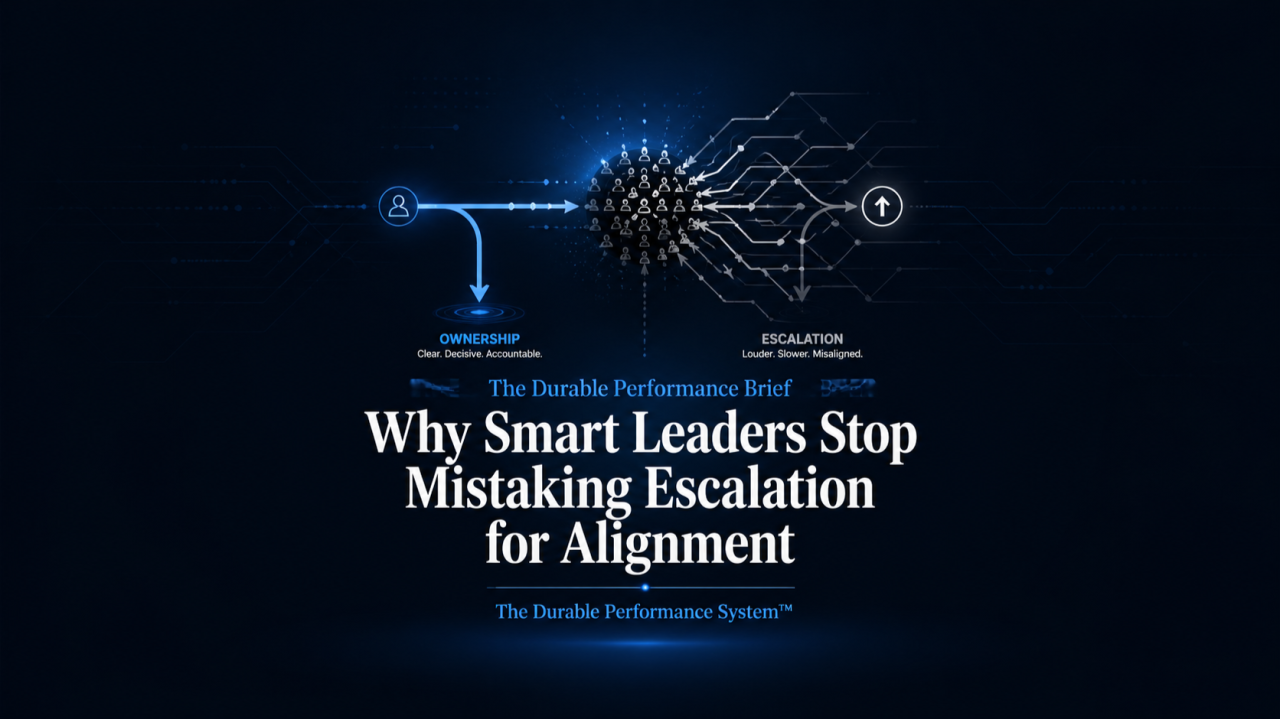
If the leader repeatedly becomes the closer, the shock absorber, the conflict carrier, the escalation endpoint, and the interpreter of every serious problem, the organization learns quickly. Managers stop holding tension for as long. Teams escalate before fully working the issue. Cross-functional friction rises faster. Ambiguity gets routed upward instead of being resolved near the work. Serious pressure starts to feel like something that belongs above.
That is the trap.
A leader can become so good at carrying pressure that they stop noticing the system is failing to grow pressure-bearing capacity beneath them. Now, strength is being used in a way that quietly suppresses development. What looks like support can become underinvestment in capability.
What This Looks Like in the Wild
A team faces a visible customer issue. The leader handles it directly because the stakes feel too high to leave in weaker hands.
A manager struggles with cross-functional conflict. The leader keeps stepping in because the relationship is fragile and the manager is not fully ready.
A politically difficult message needs to be delivered. The leader takes it personally to keep the team from being crushed.
Each move can be reasonable.
The problem is that the return path is rarely defined. The leader knows how to step in. They do not define how the system steps back out. So the intervention stays. The leader remains the translator, the tie-breaker, the emotional buffer, the one who can “just handle it.” Architecture starts forming around a person instead of growing through the layer below.
Managers feel this cost first.
They still carry the title. They still appear to own the work. But when the pressure becomes serious enough, real leadership arrives from above. Over time, they learn a damaging lesson: my role is to manage operations until the issue becomes consequential, then the center takes over. That does not build conflict capacity, judgment under pressure, or truth-telling when the stakes rise. It teaches borrowed authority.
Why Leaders Misread It
Because over-absorption often feels humane.
Leaders do not want people crushed by a political fight they are not ready for. They do not want a developing manager damaged by a visible miss. They do not want the team carrying more strain than it can bear. Some of that is real care. But leaders have to ask a harder question: Am I protecting this person from destructive pressure, or from developmental pressure? Those are not the same thing. Destructive pressure overwhelms without building. Developmental pressure stretches capability when it is bounded, supported, and real.
Leaders also misread overload once the pattern is mature.
At some point, everything important seems to touch them. Too many conflicts need intervention. Too many escalations need interpretation. Too many decisions rise. The leader often explains this in one of two ways: the team is not strong enough, or the season is just hard. Both may be partly true. But sometimes the leader is experiencing the downstream effect of having taught the organization to route serious pressure toward the center by default.
This is why heroic leadership is not the same thing as durable leadership.
Heroics can rescue a launch, save an account, fix a relationship, or repair a miss. But repeated heroics are often evidence of weak design being offset by strong individuals. A system dependent on rescue is not resilient. It is underbuilt.
One Practical Diagnostic
Ask this in your next leadership meeting:
Where in our system has serious pressure started belonging to the center by habit?
Then press harder:
- What recurring tensions still flow upward that should increasingly be handled below?
- What manager still has partial ownership because real authority arrives only when the situation becomes consequential?
- What pressure have we stabilized without defining how the capability returns below?
- Are people in this system learning from pressure, or mainly learning to transfer it?
- If a leader disappeared for two weeks, what conflicts, decisions, or escalations would stall simply because that leader has become the system’s shock absorber?
Those questions matter because pressure is always instructional. The only question is what the system is being taught.
If You Change One Thing This Week
Pick one class of pressure you keep absorbing personally.
Then define the return path.
That means naming:
- Who should own the first pass next time
- What authority do they need to carry it
- What escalation threshold actually justifies senior involvement
- What coaching or backing will they receive when they hold the weight properly
Do not just step back rhetorically.
Redistribute structurally.
Strong leaders do not stop carrying pressure. They stop carrying all of it themselves. They resist the urge to rescue too soon so the right layer can feel enough real weight to become stronger, not just safer.
Go Deeper
This issue builds on ideas from What Smart Leaders Stop Doing, part of The Durable Performance System™ series.
Related read:
What Smart Leaders Stop Doing examines how capable leaders can become the default absorber of conflict, ambiguity, and escalation, and how that pattern quietly weakens managers, teaches dependence, and concentrates pressure where it should no longer live.
Closing Thought
The goal is not to prove how much weight you can personally carry.
The goal is to build a system that can carry more of the right weight at the right level without needing your rescue every time.
Because once serious pressure belongs to the center by habit, the organization stops growing its capabilities.
It starts growing dependence.
Question for readers: Where in your organization is leadership still carrying pressure that should already be building strength below?
Next Wednesday: Why smart leaders stop waiting too long to name what everyone can see.
Part of The Durable Performance System™
Books, field guides, and frameworks on power, incentives, authority, accountability, and execution.
Published every Wednesday morning.