The Durable Performance Brief Archive
Browse every published edition on organizational design, organizational effectiveness, drift, authority, incentives, accountability, consequence, execution, and durable performance.
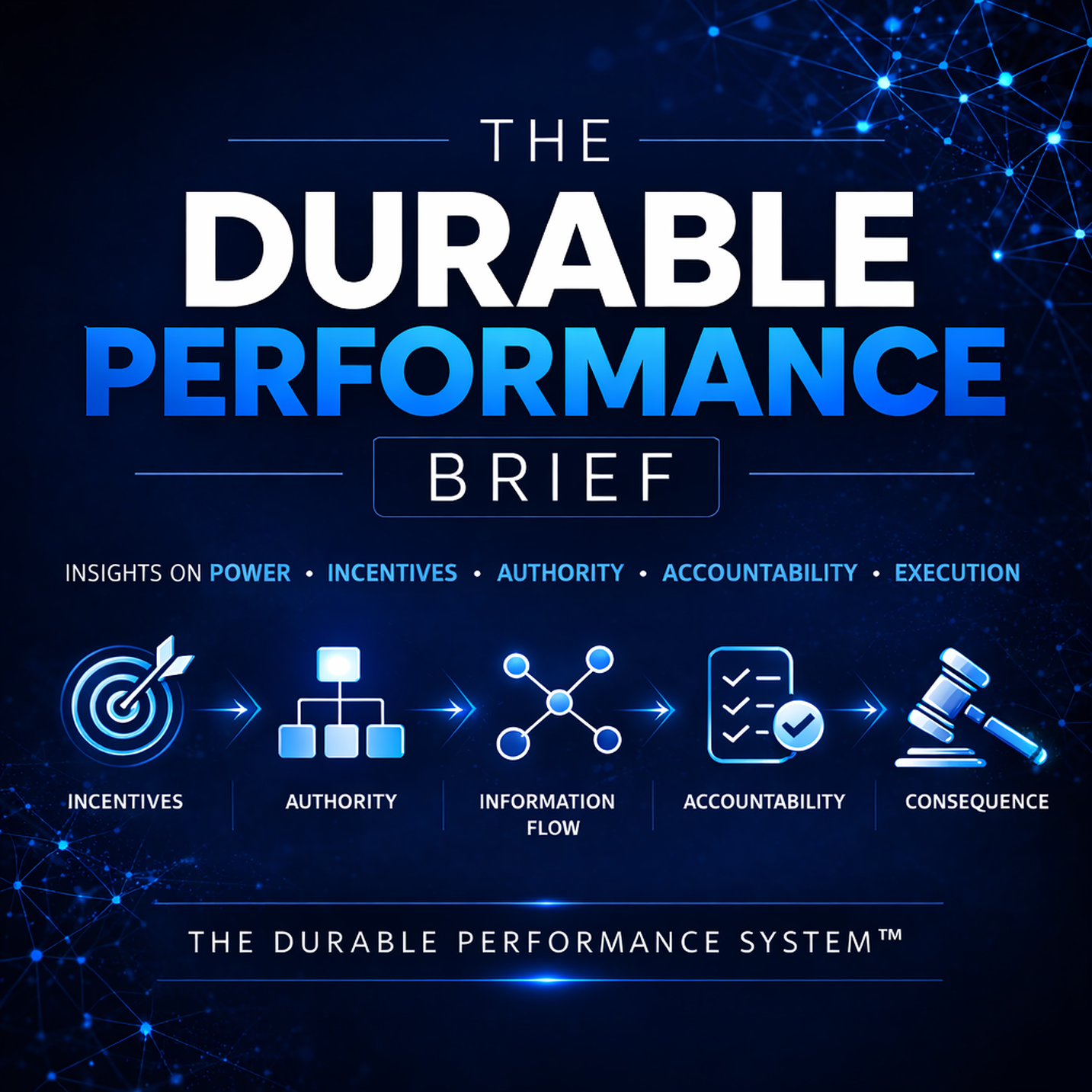
Start with the strain you are trying to name.
The archive is designed for direct entry. Readers do not need to begin with the first edition or read the publication in sequence.
Find the Visible Pattern
Begin with the issue already present: slow decisions, weak ownership, filtered information, overload, approval drag, inconsistent standards, or recurring escalation.
Understand the Mechanism
Each edition moves beneath behavior to the incentives, authority, information, accountability, operating design, and consequences producing it.
Look for Repetition
Give greater weight to patterns that recur across people, teams, quarters, initiatives, or leadership changes.
Examine the Arrangement
Ask how decision rights, priorities, information, rewards, standards, handoffs, and coordination have been designed.
Evaluate the Result
Consider whether the current arrangement is improving or weakening decision quality, throughput, ownership, trust, adaptability, and correction.
Follow the Reading Path
Use the related concept, book, diagnostic, Field Guide, or resource to continue from recognition into deeper diagnosis and correction.
Each edition connects system arrangement with operating results.
The archive uses recognizable operating problems as entry points into the relationship between organizational structure and durable performance.
Organizational Design
Organizational design includes how authority, information, incentives, accountability, roles, priorities, standards, coordination, and operating mechanisms are arranged.
Brief editions help readers recognize how those arrangements can produce approval delays, filtered truth, weak ownership, competing priorities, protected exceptions, and execution drag.
Organizational Effectiveness
Organizational effectiveness reveals whether the operating system converts effort, information, authority, decisions, and resources into intended outcomes without excessive friction or dependence.
Brief editions examine early evidence that throughput, judgment, ownership, trust, adaptability, or correction capacity may already be weakening.
Use the archive as an entry point into the doctrine.
These foundational pages help place individual Brief topics within the wider structural-performance framework.
Performance Is Structural
Understand why repeated outcomes usually point to the conditions the system rewards, permits, delays, protects, or fails to correct.
Explore the core premise →Organizational Design
Examine how work, authority, information, incentives, accountability, priorities, and coordination are arranged.
Explore organizational design →Organizational Effectiveness
Evaluate what the current arrangement produces in capability, execution, adaptability, trust, ownership, and durable results.
Explore organizational effectiveness →Organizational Drift
See how softened standards, weakened authority, lingering exceptions, and delayed correction gradually change the system.
Explore organizational drift →Move from a single essay into the next useful layer.
The Brief names the pattern. These pathways support deeper study, practical diagnosis, and structural correction.
The Durable Performance Brief
Review the publication, subscribe by email or LinkedIn, and begin with the featured opening edition.
Visit the Brief →The Drift Diagnostic
Identify where organizational design, authority, incentives, information, accountability, or execution discipline may already be weakening.
Take the Diagnostic →The Book System
Explore the deeper frameworks, drift mechanics, failure patterns, leadership application, career application, and correction tools.
Explore the Books →The Field Guide
Turn structural recognition into scoring, worksheets, correction choices, guardrails, and recurring maintenance.
Explore the Field Guide →Resources
Access videos, diagnostics, essays, and practical materials that extend the structural-performance doctrine.
Explore Resources →The Durable Performance System™
See how organizational design, organizational effectiveness, authority, incentives, information flow, accountability, consequence, execution, and entropy fit together.
See the Complete System →Read The Durable Performance Brief.
Browse the archive below, beginning with the newest edition. Each entry should display its edition number, title, publication date, excerpt, and direct link.
-
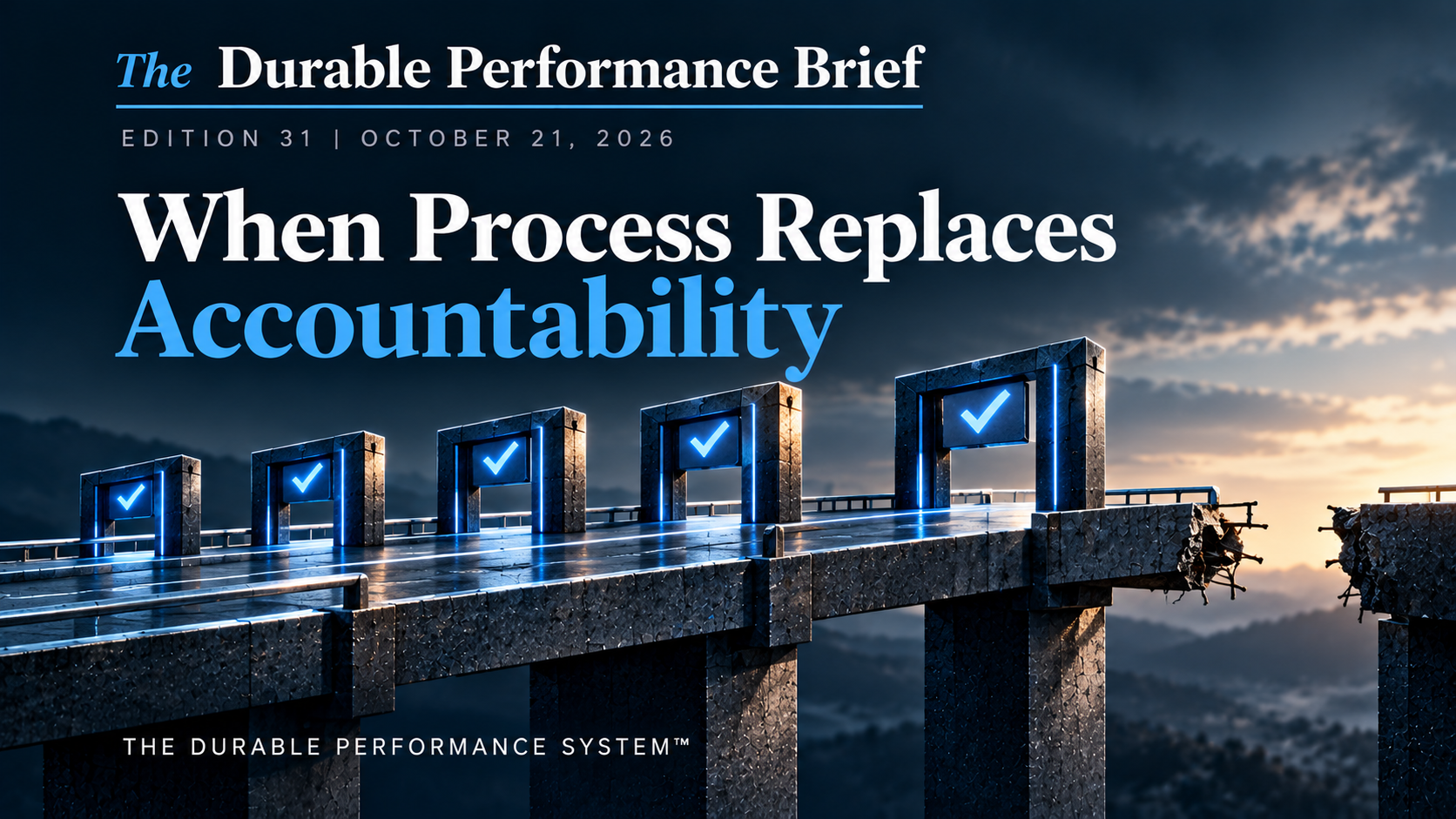
When Process Replaces Accountability
Read this edition →: When Process Replaces AccountabilityOrganizations can become highly disciplined about completing procedures while losing accountability for results. Discover how procedural compliance replaces outcome ownership—and what leaders can do to restore meaningful correction.
-

The Slow Erosion of Judgment
Read this edition →: The Slow Erosion of JudgmentIndependent judgment can disappear without formal authority changing. Discover how organizational processes, leadership behavior, and consequences gradually teach capable people to stop deciding.
-
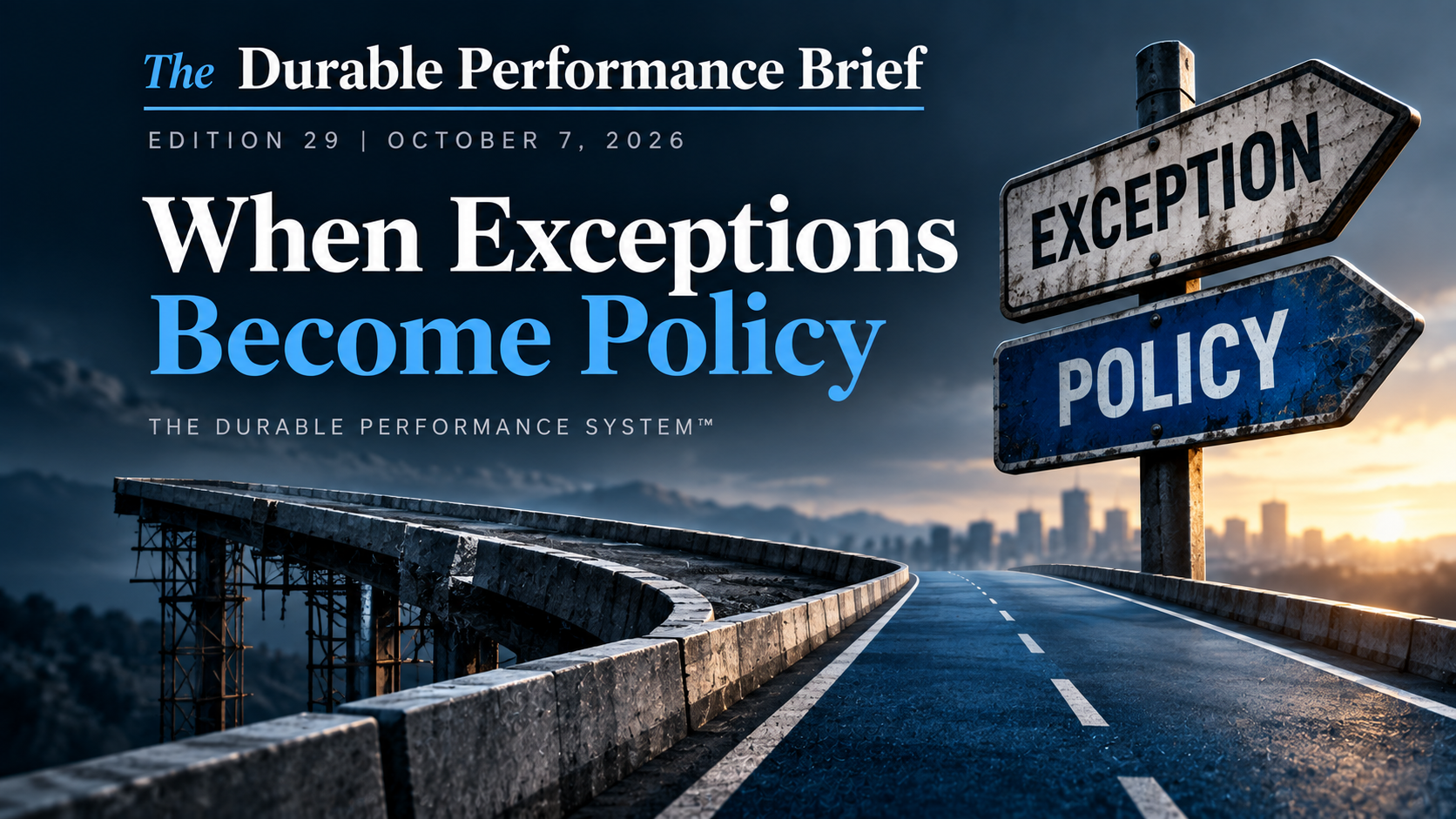
When Exceptions Become Policy
Read this edition →: When Exceptions Become PolicyPolicies do not always change through formal decisions. Repeated exceptions can become precedent until the organization follows an operating rule that was never deliberately designed.
-
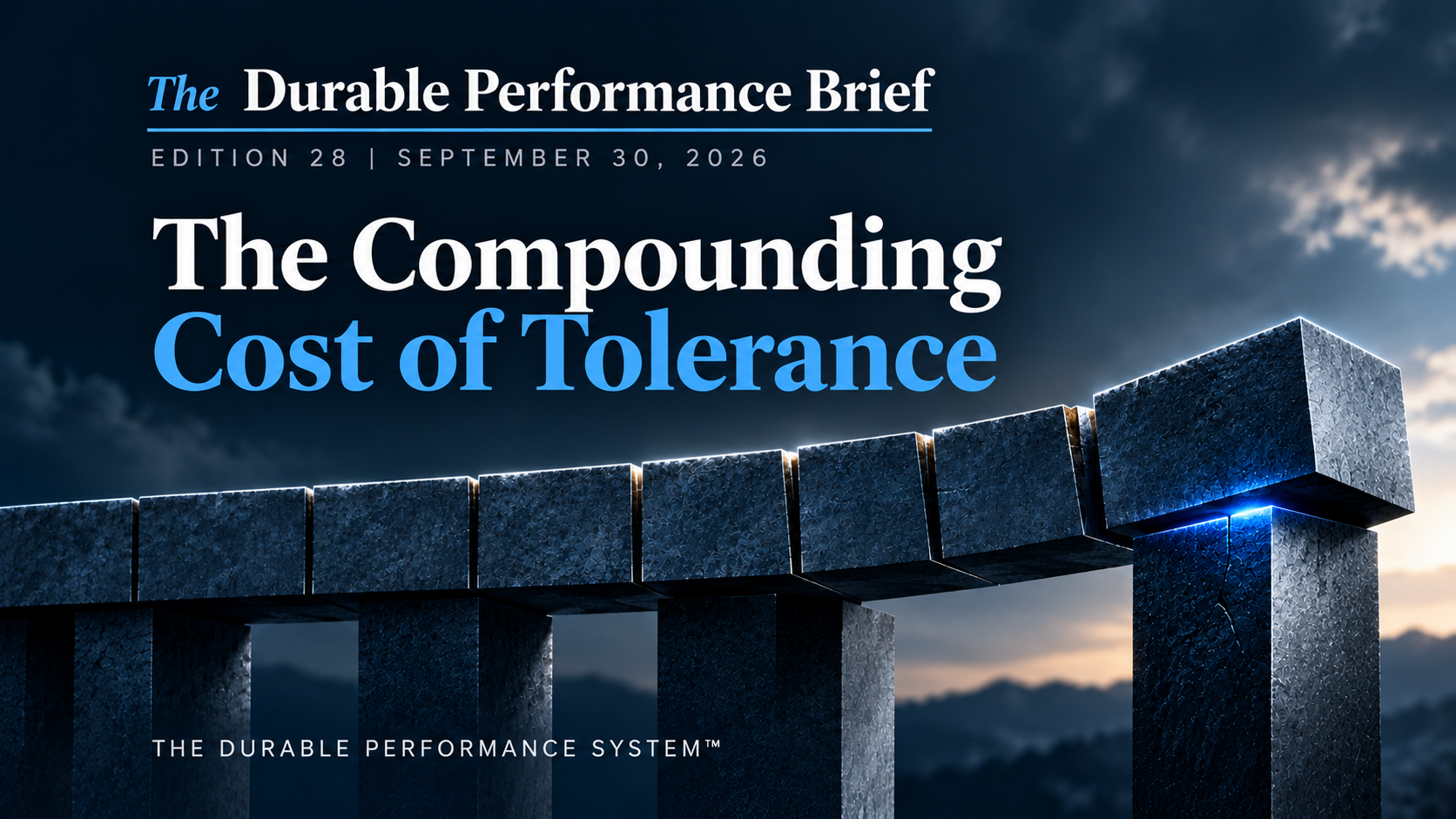
The Compounding Cost of Tolerance
Read this edition →: The Compounding Cost of ToleranceTolerance is not passive. Every uncorrected exception teaches the organization something about what is truly required. Over time, reasonable accommodations can become precedent, reshape incentives, and quietly change…
-
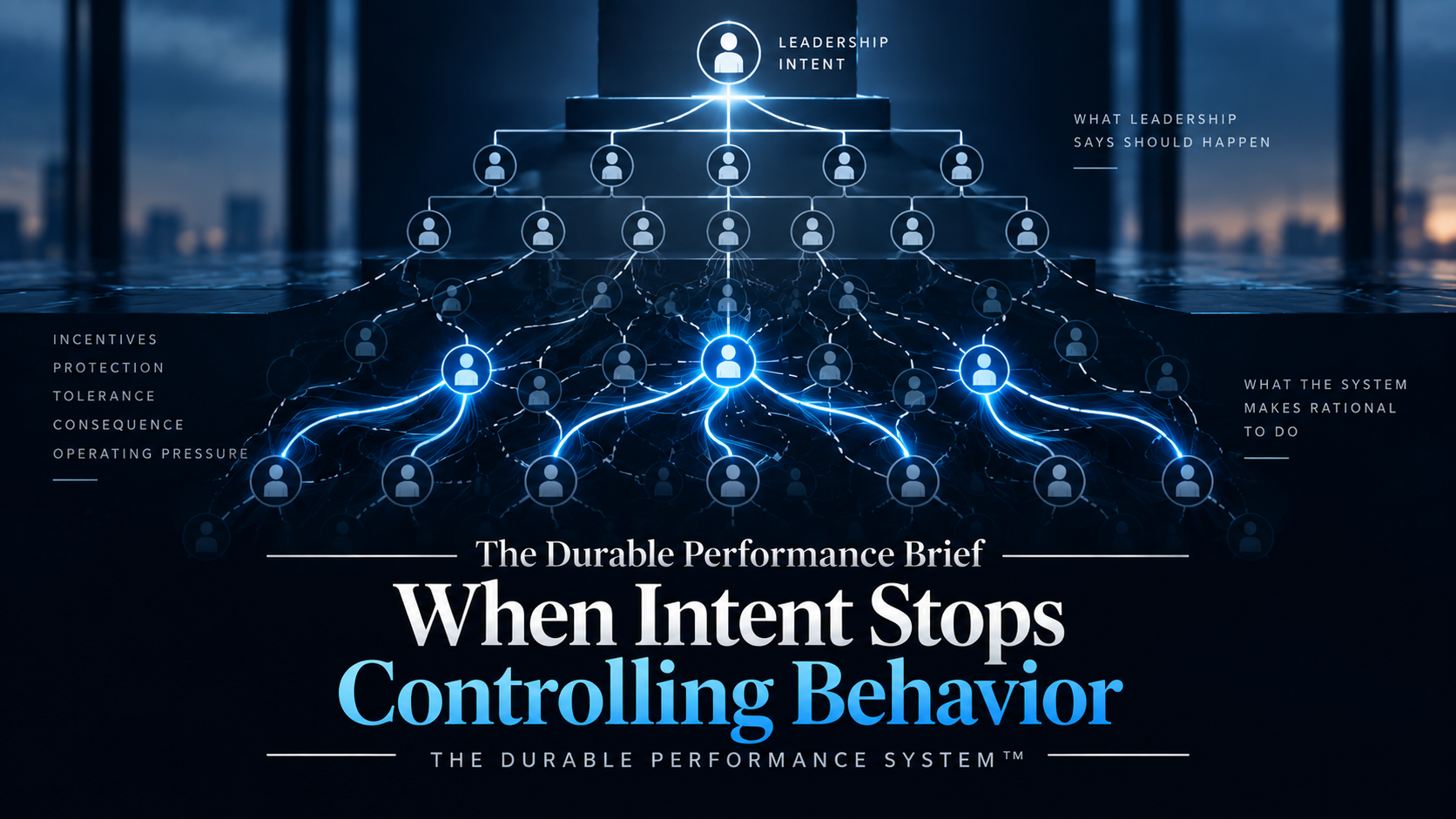
When Intent Stops Controlling Behavior
Read this edition →: When Intent Stops Controlling BehaviorA structural look at why leadership intent stops controlling behavior when rewards, protection, tolerance, and consequence teach employees something different from what leaders say.
-

When Drift Looks Like Stability
Read this edition →: When Drift Looks Like StabilityA structural look at when organizational drift looks like stability—and how high performers, managers, workarounds, and hidden effort can preserve results while concealing weakening design.
-
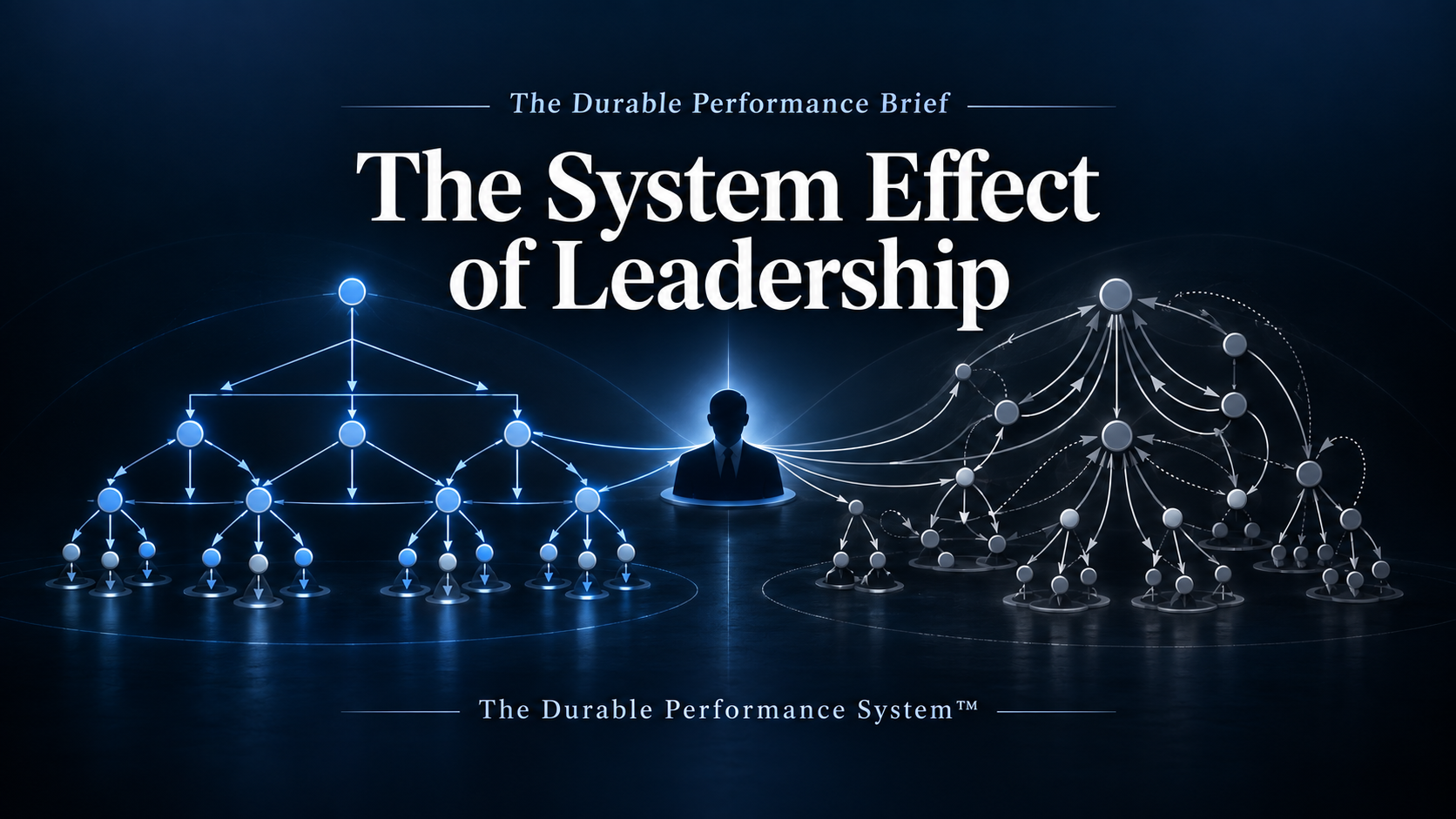
The System Effect of Leadership
Read this edition →: The System Effect of LeadershipA structural look at the system effect of leadership—and why leaders should judge themselves by what becomes more true around them, not simply by effort, intent, visibility, or…
-
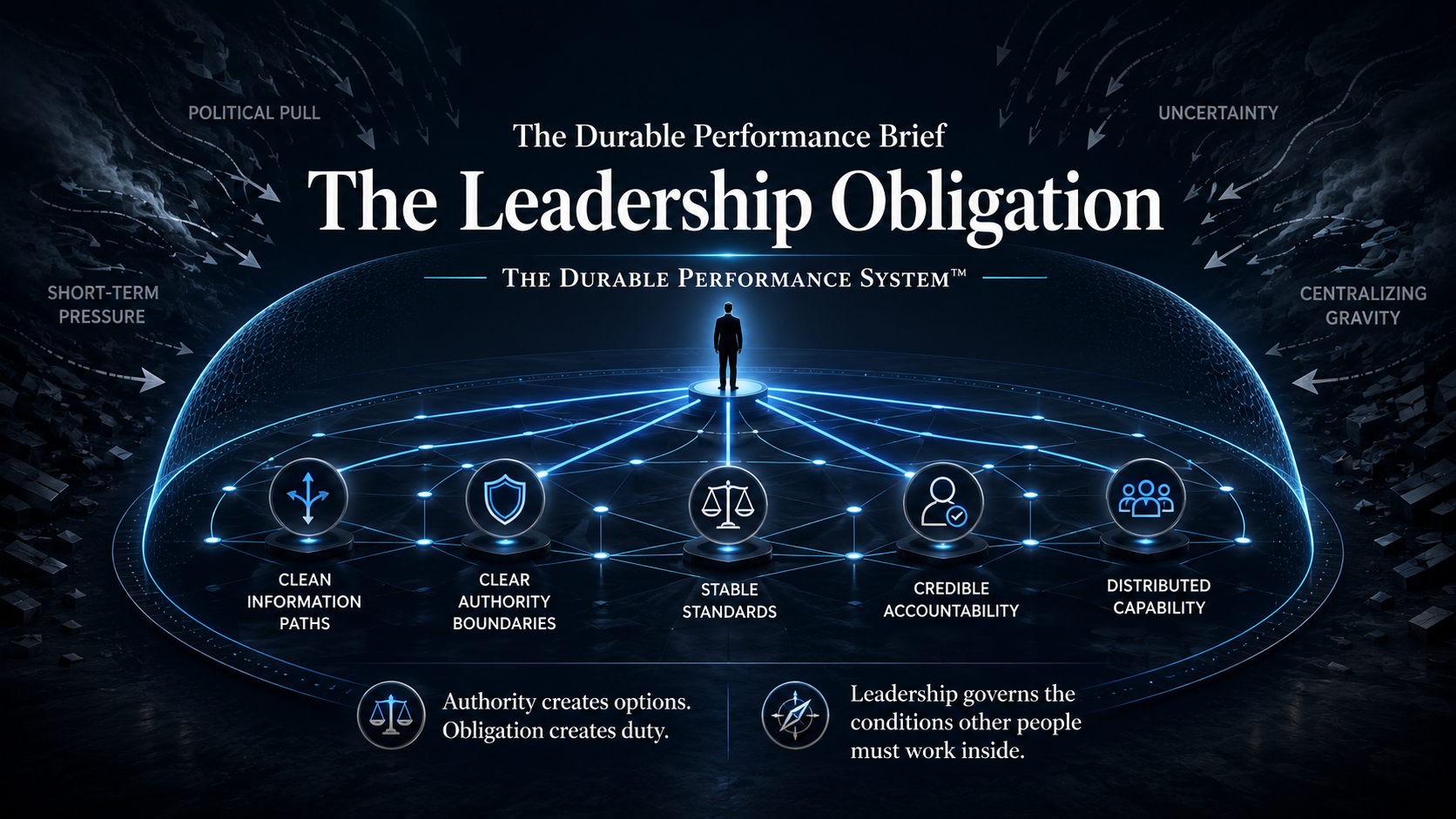
The Leadership Obligation
Read this edition →: The Leadership ObligationA structural look at the leadership obligation: acting before failure creates permission, protecting truth and standards, exercising self-restraint, and governing for the future condition of the system.
-
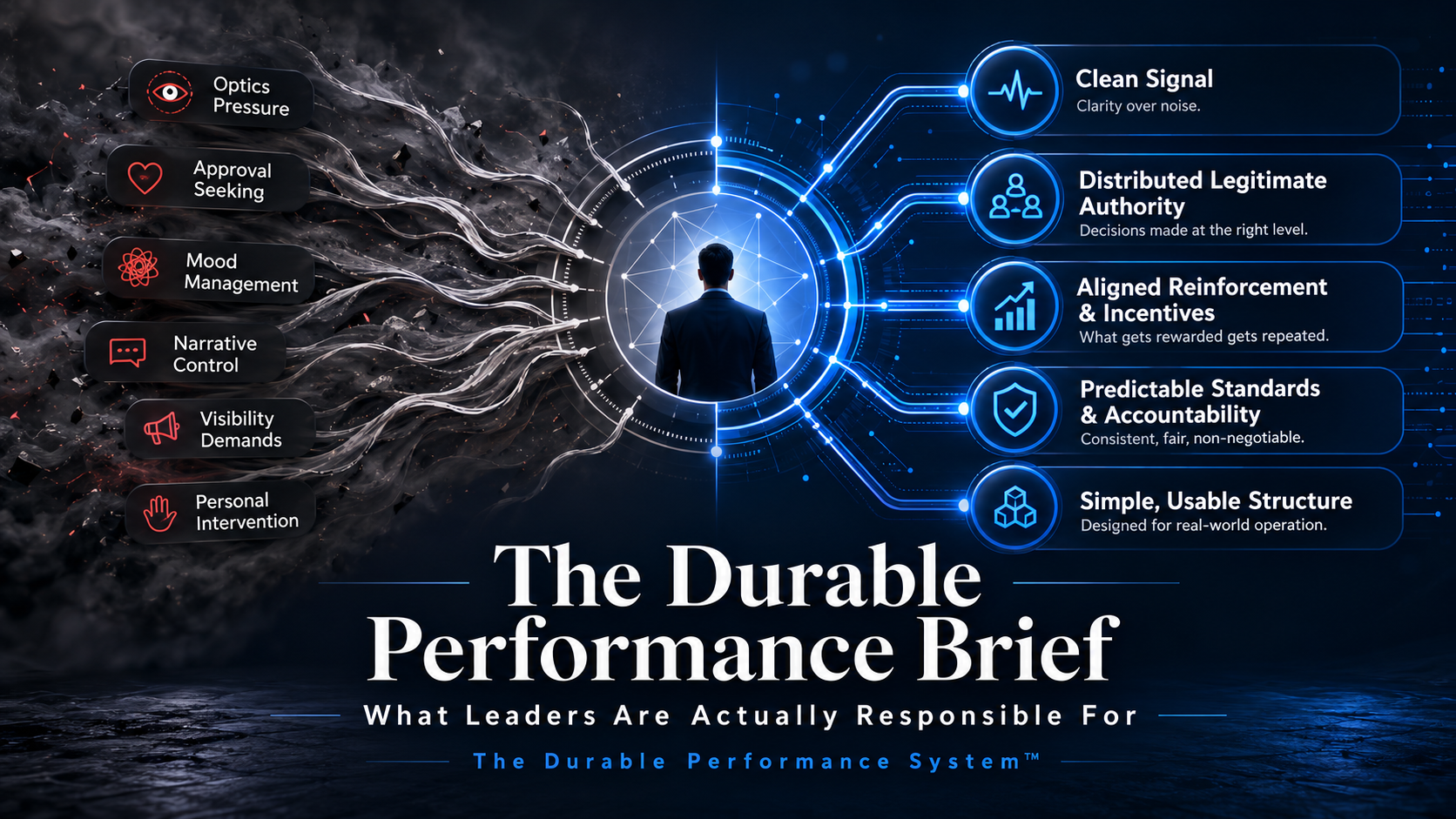
What Leaders Are Actually Responsible For
Read this edition →: What Leaders Are Actually Responsible ForA structural look at what leaders are actually responsible for—and why leadership should be judged by clearer authority, cleaner signal, credible standards, stronger capability, and system effect.
-
What Predictable Standards Make Possible
Read this edition →: What Predictable Standards Make PossibleA structural look at what predictable standards make possible—and how consistent enforcement strengthens managers, reduces political interpretation, and builds trust in the system.
-
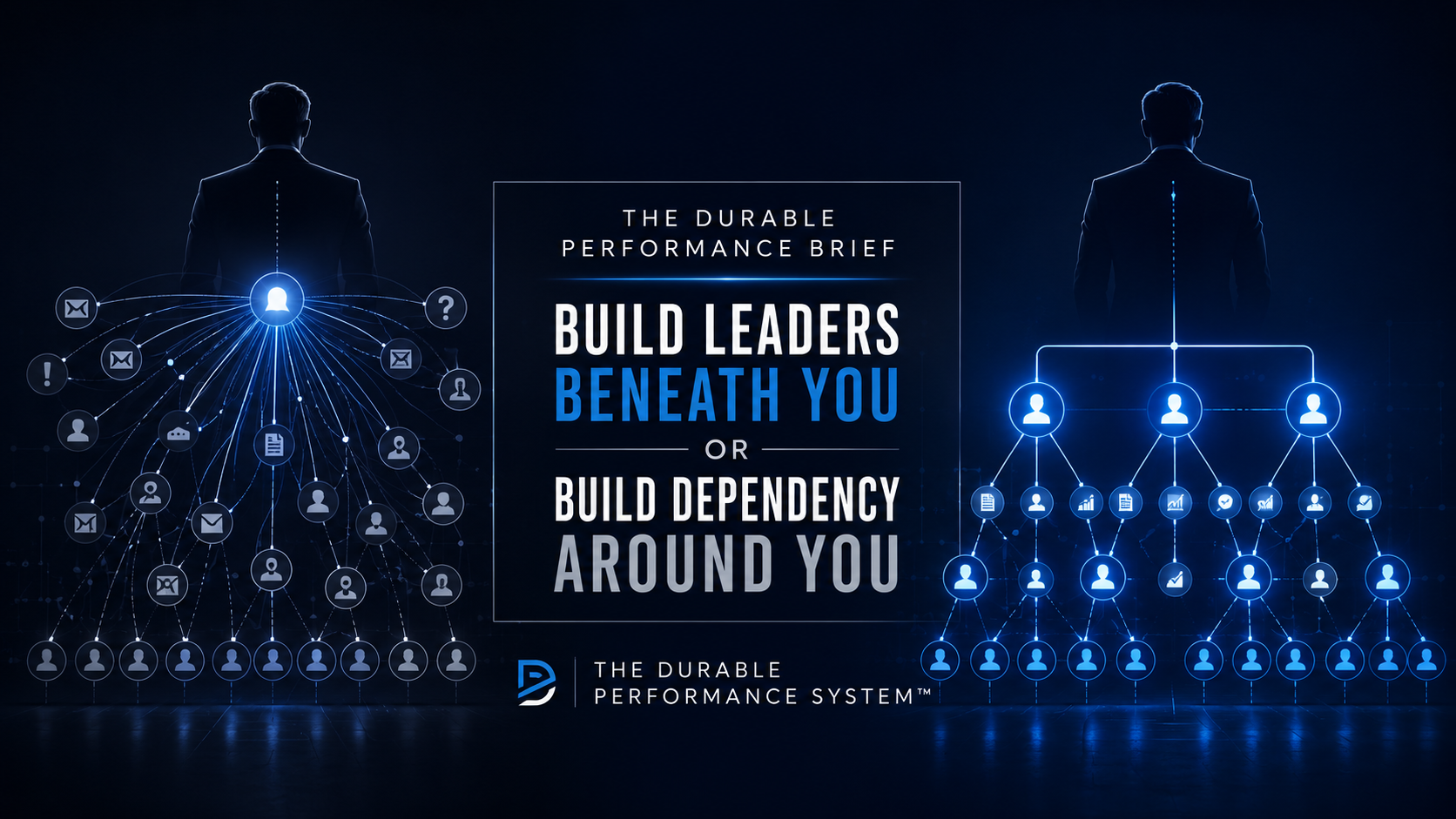
Build Leaders Beneath You or Build Dependency Around You
Read this edition →: Build Leaders Beneath You or Build Dependency Around YouA structural look at why strong leaders build capability beneath them, how well-intended involvement can create dependence, and what real leadership development requires.
-
Correct the System, Not Just the Symptom
Read this edition →: Correct the System, Not Just the SymptomA structural look at why recurring problems survive coaching and personnel changes, and how leaders correct both the individual issue and the system producing it.
-
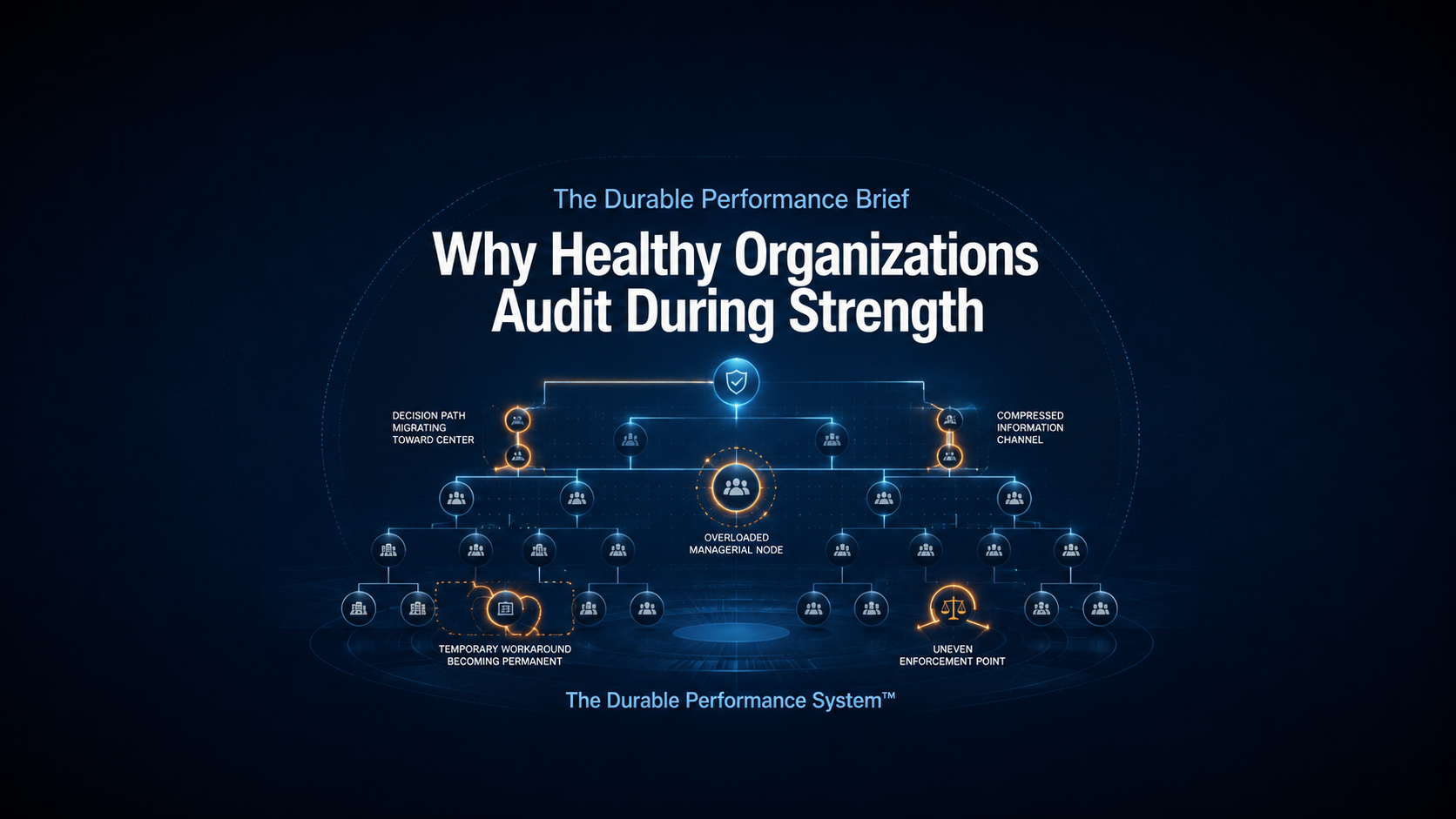
Why Healthy Organizations Audit During Strength
Read this edition →: Why Healthy Organizations Audit During StrengthA structural look at why healthy organizations audit during strength, how acceptable results can hide weakening design, and why maintenance is less costly than crisis-driven repair.
-
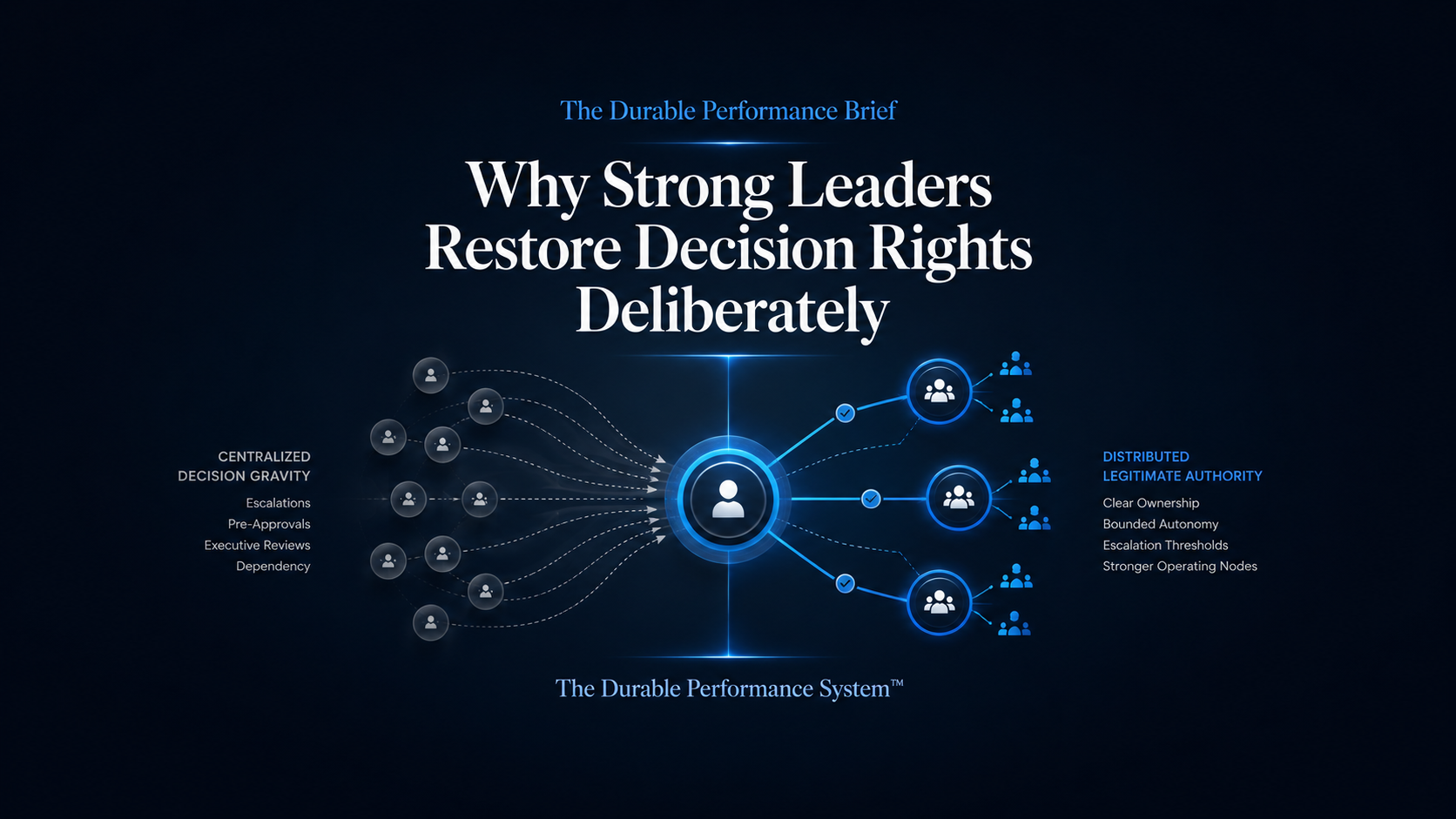
Why Strong Leaders Restore Decision Rights Deliberately
Read this edition →: Why Strong Leaders Restore Decision Rights DeliberatelyA structural look at why strong leaders restore decision rights deliberately, how authority migrates upward under pressure, and what it takes to rebuild legitimate ownership at the proper…
-
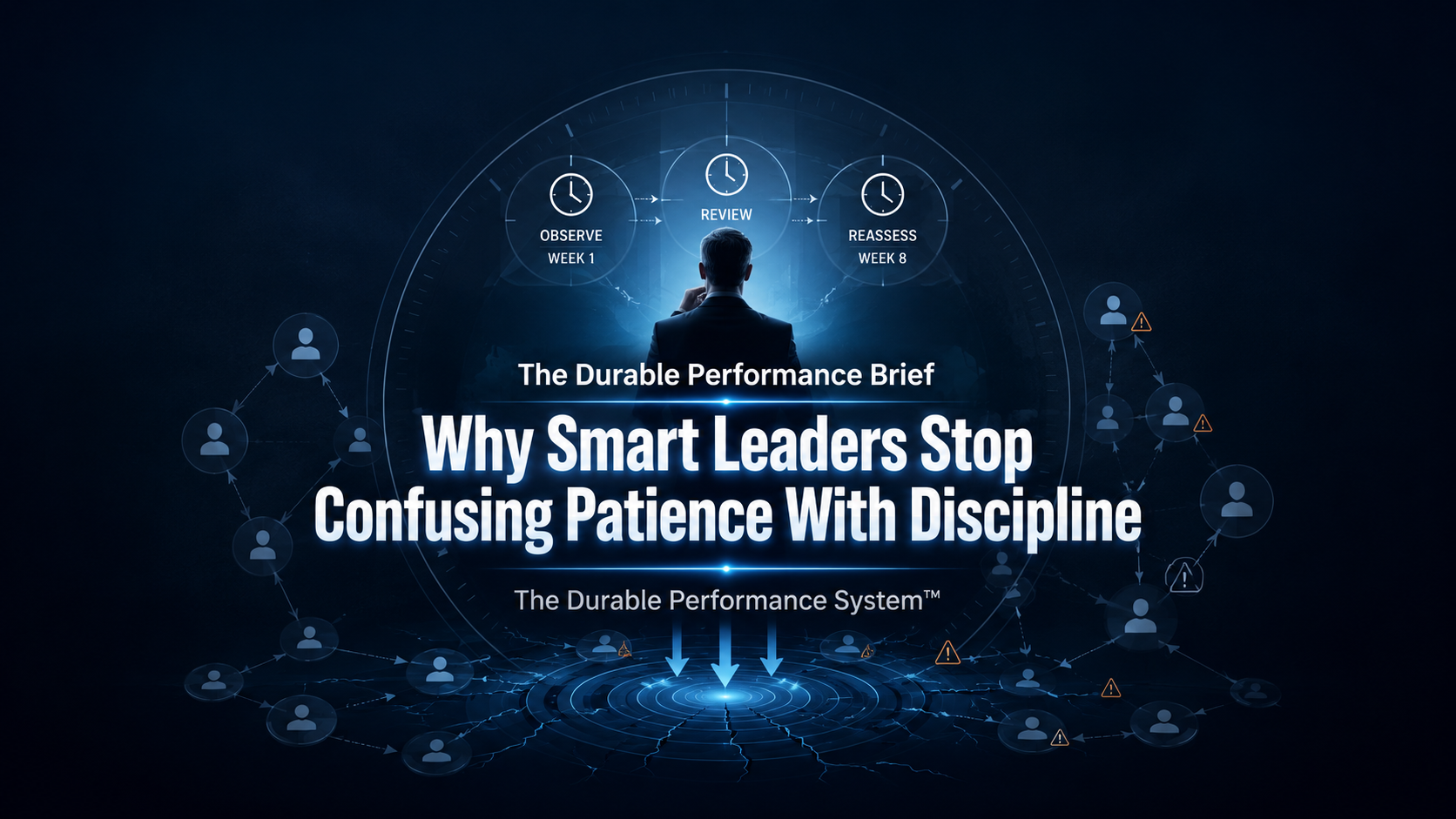
Why Smart Leaders Stop Confusing Patience With Discipline
Read this edition →: Why Smart Leaders Stop Confusing Patience With DisciplineA structural look at why smart leaders stop confusing patience with discipline, and how delayed leadership weakens managers, prolongs drift, and makes avoidable correction more expensive.
-

Why Smart Leaders Stop Waiting Too Long to Name What Everyone Can See
Read this edition →: Why Smart Leaders Stop Waiting Too Long to Name What Everyone Can SeeA structural look at why smart leaders stop waiting too long to name what everyone can see, and how delayed naming weakens managers, grows side-channel truth, and makes…
-
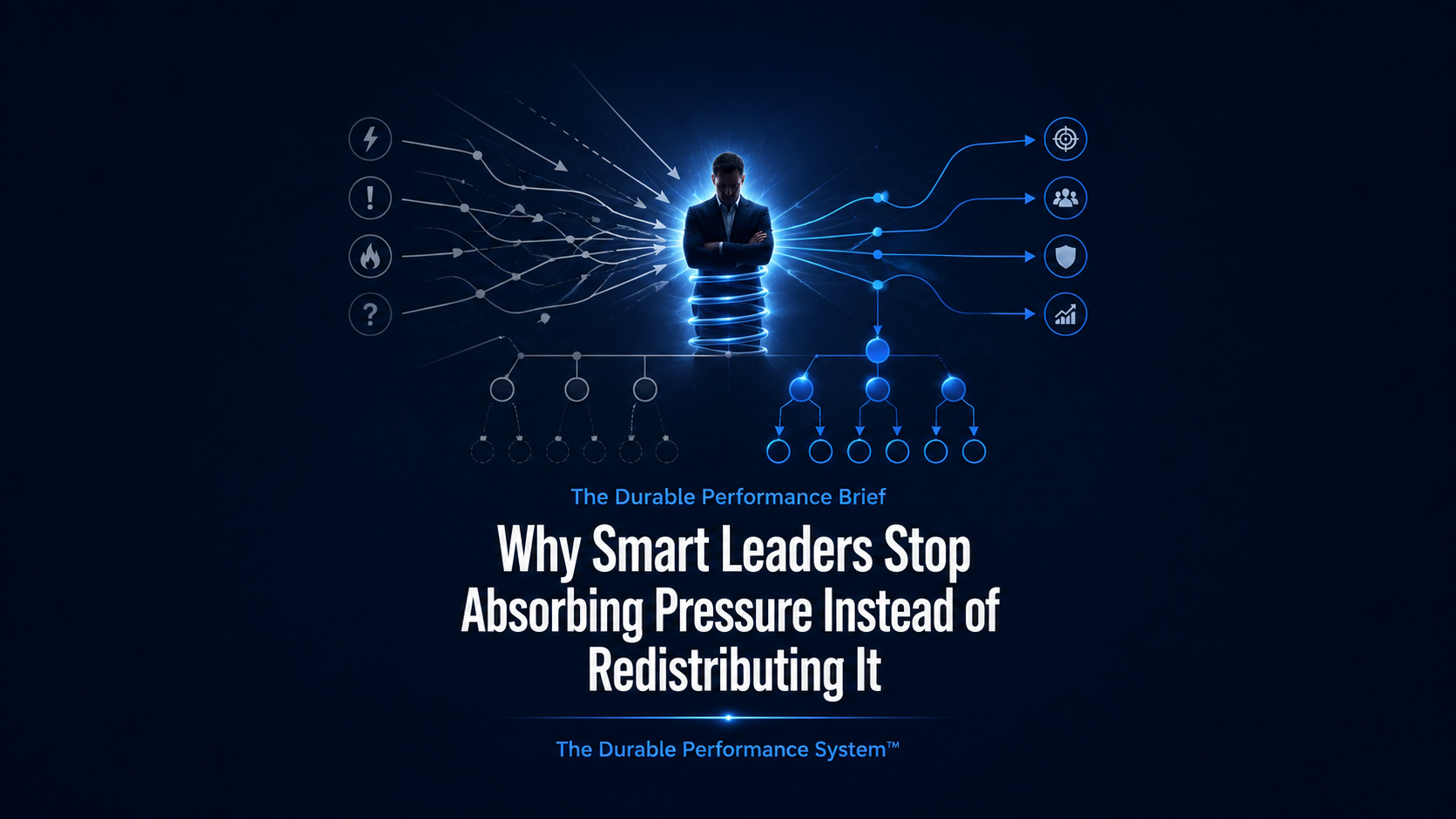
Why Smart Leaders Stop Absorbing Pressure Instead of Redistributing It
Read this edition →: Why Smart Leaders Stop Absorbing Pressure Instead of Redistributing ItA structural look at why smart leaders stop absorbing pressure instead of redistributing it, and how rescue-heavy leadership creates dependence, weakens managers, and keeps serious strain flowing back…
-

Why Smart Leaders Stop Trying to Be Universally Liked
Read this edition →: Why Smart Leaders Stop Trying to Be Universally LikedA structural look at why smart leaders stop trying to be universally liked, and how approval-seeking leadership weakens boundaries, exposes managers, and makes the system less clear and…
-

Why Smart Leaders Stop Protecting People From Consequences
Read this edition →: Why Smart Leaders Stop Protecting People From ConsequencesA structural look at why smart leaders stop protecting people from consequences, and how softened accountability weakens standards, interrupts learning, and makes the system less believable.
-
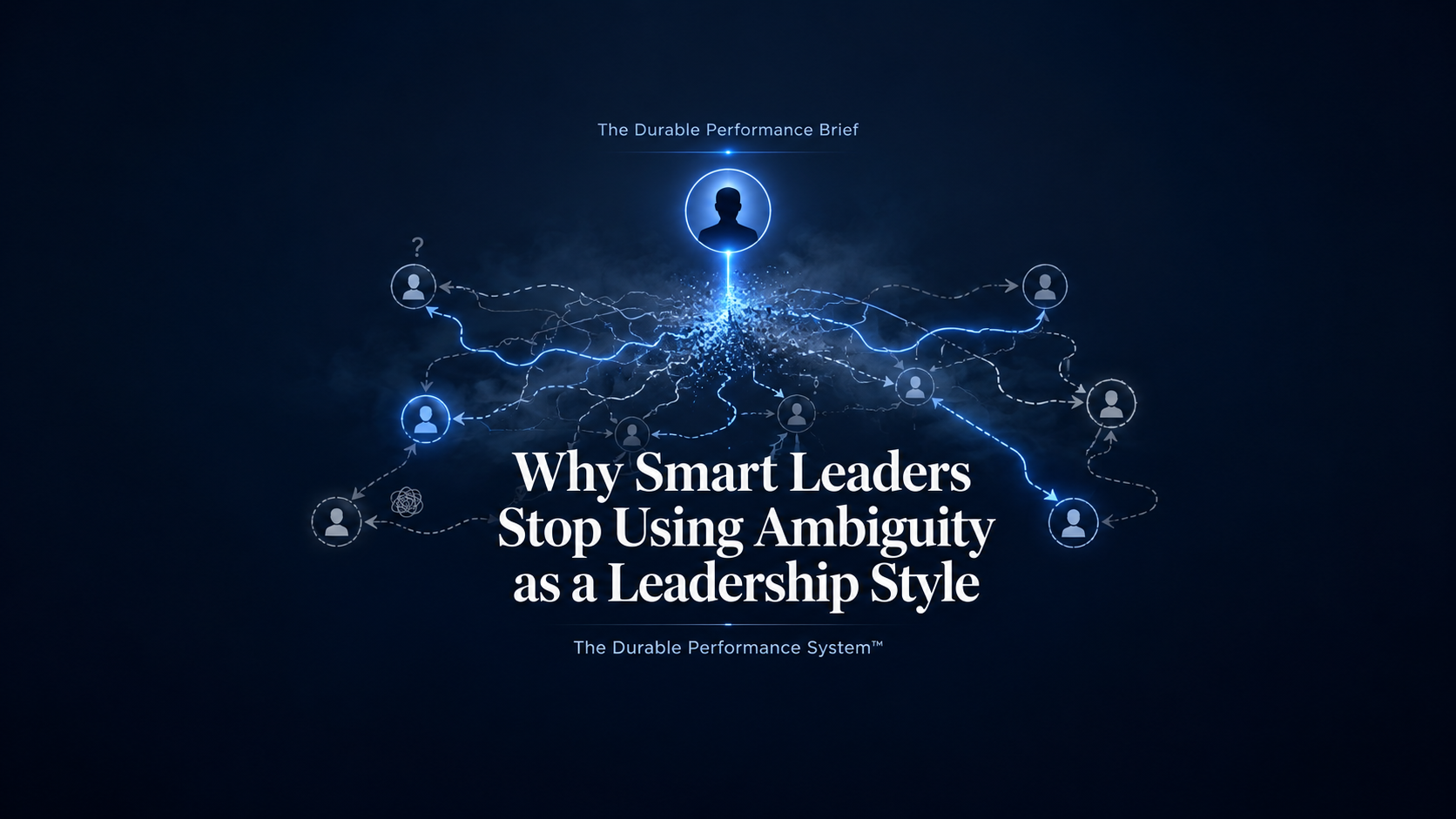
Why Smart Leaders Stop Using Ambiguity as a Leadership Style
Read this edition →: Why Smart Leaders Stop Using Ambiguity as a Leadership StyleA structural look at why smart leaders stop using ambiguity as a leadership style, and how unclear guidance creates interpretive burden, weakens accountability, and drives politics where clarity…
-

Why Smart Leaders Stop Delaying Correction Because the Person Is Valuable
Read this edition →: Why Smart Leaders Stop Delaying Correction Because the Person Is ValuableA structural look at why smart leaders stop delaying correction when someone is valuable, and how timing itself can teach the system that standards are conditional.
-

Why Smart Leaders Stop Praising Output While Rewarding Distortion
Read this edition →: Why Smart Leaders Stop Praising Output While Rewarding DistortionOrganizations do not learn the real reward system from values statements, leadership language, or offsite talking points. They learn it from who gets protected, who gets promoted, who…
-

Why Smart Leaders Stop Asking for More Visibility Than They Need
Read this edition →: Why Smart Leaders Stop Asking for More Visibility Than They NeedThe Durable Performance Brief · Edition 9 · May 20, 2026 Most leaders do not ask for more visibility because they are careless. They ask for it because…
-
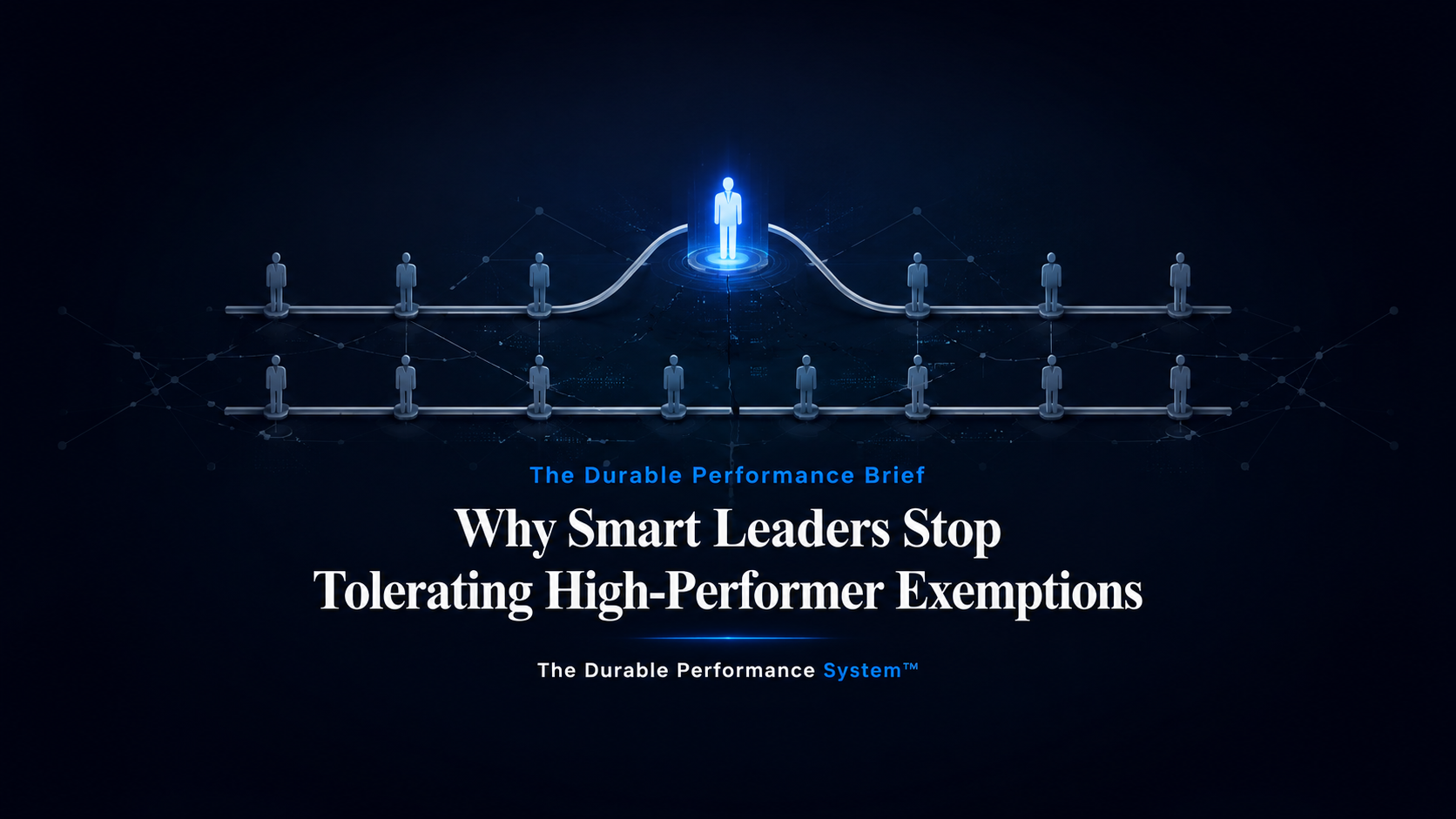
Why Smart Leaders Stop Tolerating High-Performer Exemptions
Read this edition →: Why Smart Leaders Stop Tolerating High-Performer ExemptionsThe Durable Performance Brief · Edition 8 · May 13, 2026 The fastest way to corrupt a leadership system is not low performance. It is selective consequence. The…
-

Why Smart Leaders Stop Overruling Too Early
Read this edition →: Why Smart Leaders Stop Overruling Too EarlySmart leaders stop overruling too early because improving one decision can weaken the system that needs to learn how to decide. This edition explains how early override narrows…
-
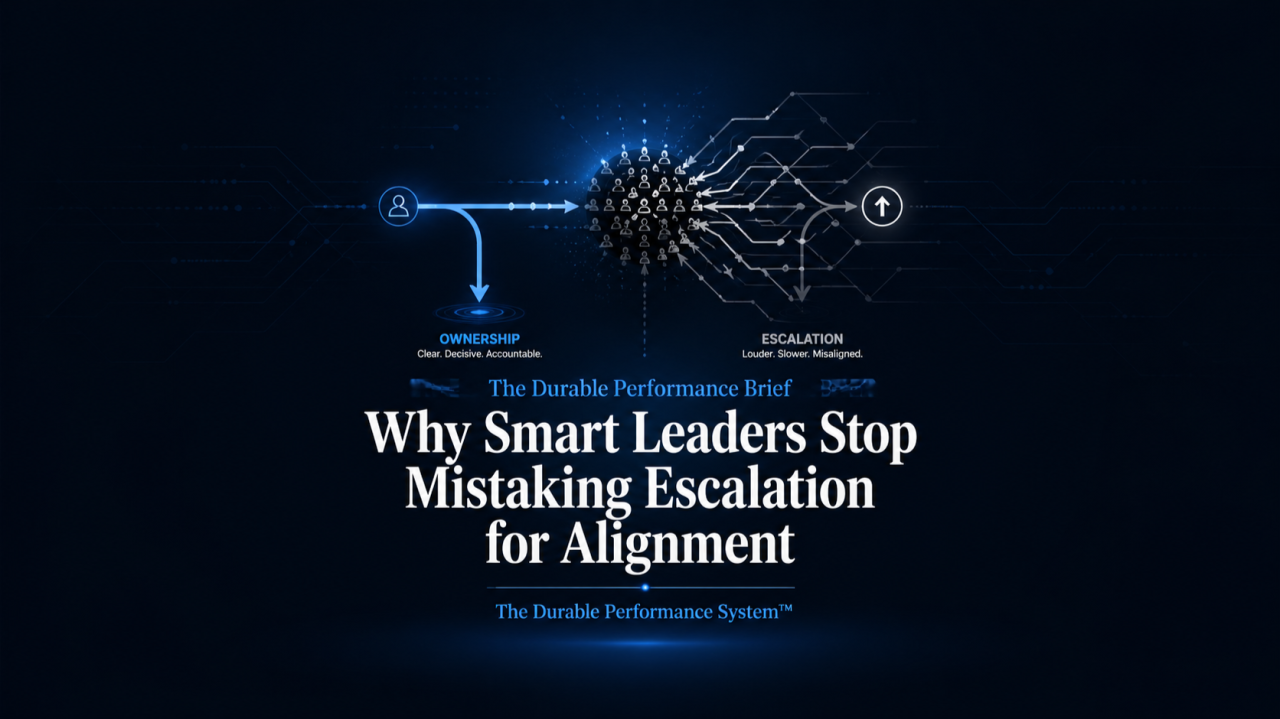
Why Smart Leaders Stop Mistaking Escalation for Alignment
Read this edition →: Why Smart Leaders Stop Mistaking Escalation for AlignmentSmart leaders stop mistaking escalation for alignment because alignment should clarify ownership, not transfer every difficult decision upward. This edition explains how repeated escalation weakens ownership, slows decision…
-

Why Smart Leaders Stop Centralizing Decisions to Feel Safe
Read this edition →: Why Smart Leaders Stop Centralizing Decisions to Feel SafeSmart leaders stop centralizing decisions to feel safe because short-term certainty often creates long-term dependency. This edition explains how authority drifts upward, decision velocity slows, and teams become…
-

Why Smart Leaders Stop Solving Problems Too Close to the Surface
Read this edition →: Why Smart Leaders Stop Solving Problems Too Close to the SurfaceSmart leaders stop solving problems too close to the surface. Recurring issues usually point to deeper structural conditions: unclear authority, distorted signal, weak accountability, or incentives that make…
-

When Visibility Starts Replacing Truth
Read this edition →: When Visibility Starts Replacing TruthWhen visibility starts replacing truth, leaders feel closer to the business while the signal is getting worse. This edition explains how reporting, dashboards, updates, and reviews can become…
-

When Alignment Starts Hiding Dependency
Read this edition →: When Alignment Starts Hiding DependencyMost leaders say they want alignment. But in many organizations, alignment quietly becomes permission. Once that happens, authority has already started moving upward, decisions slow down, and ownership…
-
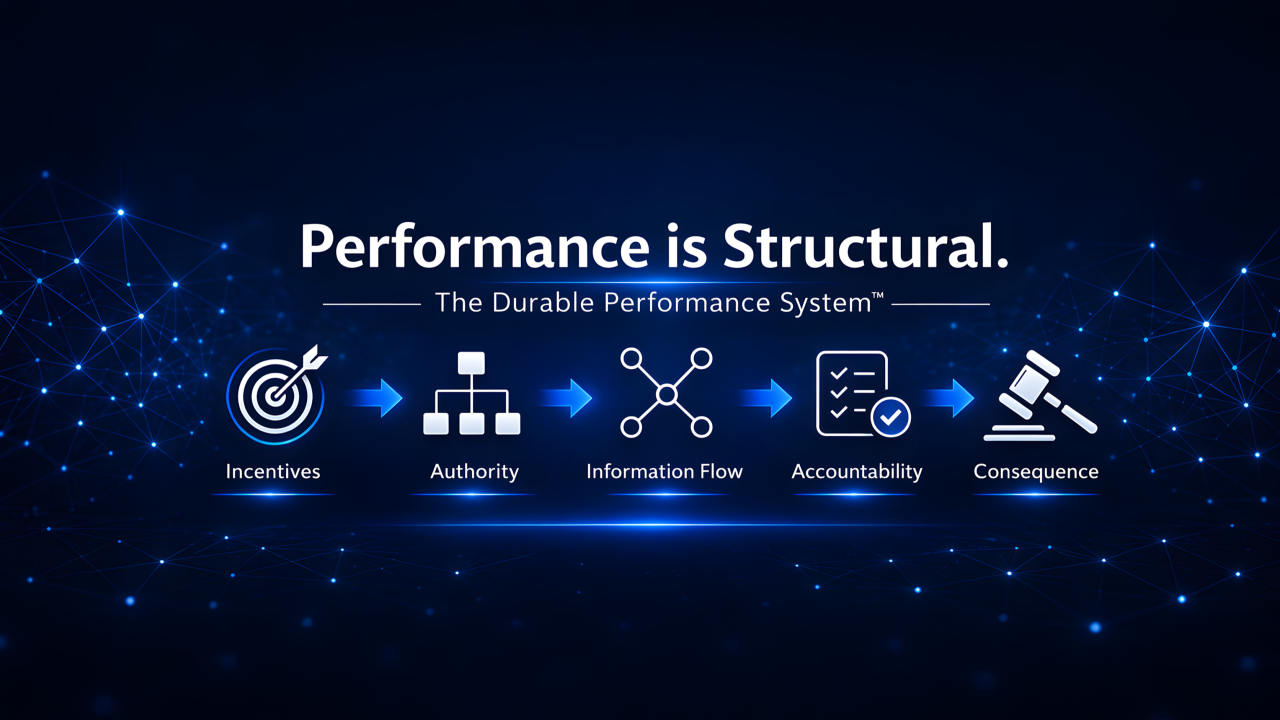
Performance Is Structural
Read this edition →: Performance Is StructuralPerformance is structural. Organizations do not usually weaken because people stop caring. They weaken because authority shifts, information compresses, accountability becomes selective, and consequence softens under pressure.
Use the Durable Performance Brief Archive to stay close to the doctrine.
Use the Brief to revisit the system in short, disciplined pieces. When an edition names what you are seeing, the diagnostic and books are the next step.