Edition 22 | August 19, 2026
Most organizations can tell you what their standards are.
Respect matters.
Ownership matters.
Deadlines matter.
Truth matters.
Follow-through matters.
The problem is rarely whether those standards have been stated.
The problem is whether people can predict what happens when they are violated.
That is where standards become structural—or become little more than organizational language.
A standard is not strong because leadership talks about it forcefully.
It is strong when people trust that the line will still hold when holding it becomes inconvenient.
The Core Thesis
Predictability creates operating trust.
When people understand the standard and can reasonably predict how leadership will respond when it is crossed, several things become possible at once.
Managers become more confident.
Employees spend less energy reading personalities.
Political calculation declines.
Correction becomes less surprising.
High performers understand that results do not purchase exemption.
People can focus more on the work because they do not have to continuously interpret whether the rules will change depending on who is involved.
This is why standards are not merely cultural statements.
They are part of Accountability Design.
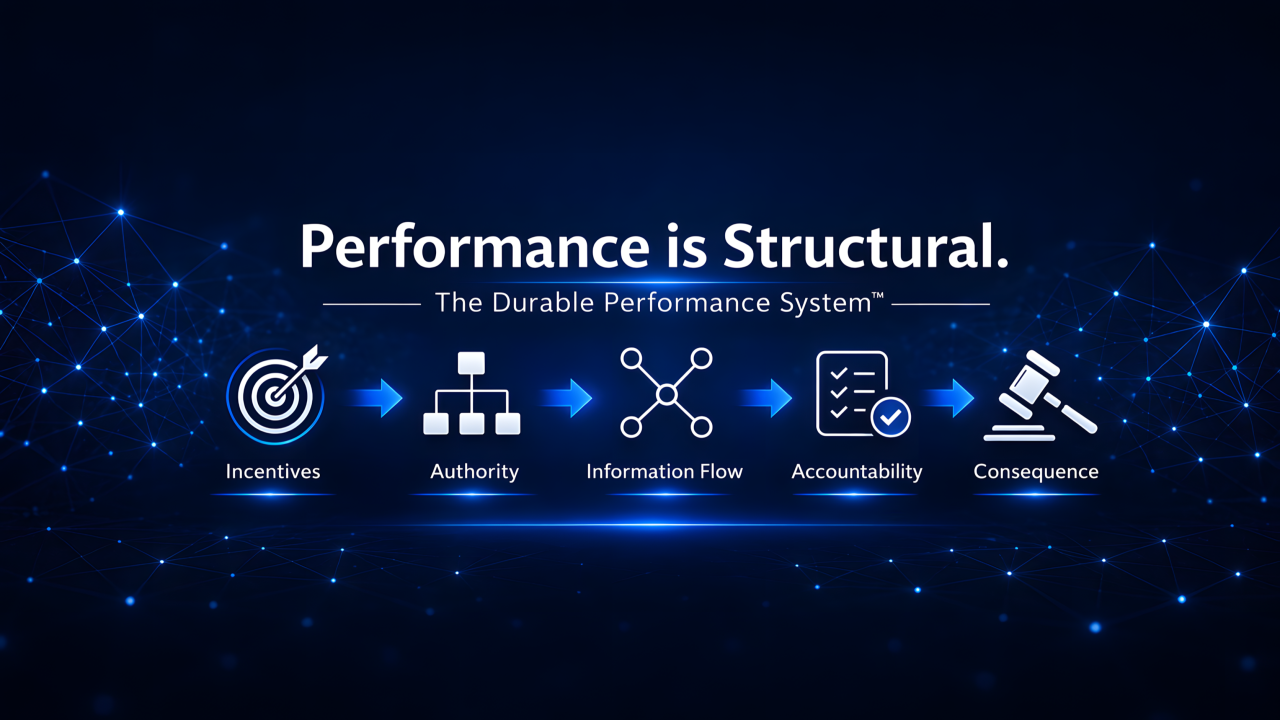
Accountability becomes credible when ownership, standards, evidence, correction, and consequence are aligned rather than applied selectively from case to case.
The goal is not sameness.
Different situations can require different responses.
Context matters.
Intent matters.
Severity matters.
History matters.
But context should shape the response without erasing the principle.
That is the distinction.
Predictability does not mean every case gets the same consequence.
It means people can still see the same standard operating underneath the consequence.
What This Looks Like in the Wild
Imagine an organization that says respect is non-negotiable.
A new manager behaves dismissively in a meeting and is corrected quickly.
A high-performing sales leader behaves similarly but receives a softer response because the quarter is important.
A technically brilliant director repeatedly undercuts colleagues but is described as difficult and valuable.
Leadership still believes it has a respect standard.
The organization sees something else.
It sees a hierarchy of consequence.
It learns that the line depends on status, value, timing, and political inconvenience.
Now people no longer have to ask:
What is the standard?
They ask:
Who is involved this time?
That question changes the entire operating environment.
Once employees have to interpret the person before they can interpret the standard, politics has entered the gap.
See more on Organizational Drift because this is exactly how reasonable exceptions and selective enforcement gradually become operating precedent.
The standard rarely disappears formally.
It becomes conditional.
And conditional standards force people to study the system socially rather than trust it structurally.
What Predictability Gives Managers
Managers often sit closest to the cost of inconsistent standards.
They are told to hold the line.
Then they watch senior leadership reinterpret the line when the case gets uncomfortable.
That teaches them quickly.
The next time a difficult issue appears, they hesitate.
They escalate earlier.
They soften the conversation.
They wait for senior sponsorship before enforcing what they were supposedly already responsible for enforcing.
Eventually, leadership complains that managers lack courage.
The deeper question is whether managers have learned that enforcement is safe only when senior leaders agree with the specific case.
Predictability changes that.
Managers know the standard.
They understand their authority.
They know when escalation is appropriate.
And most importantly, they believe leadership will still back legitimate enforcement when the person involved is valuable, influential, senior, or politically inconvenient.
That is when Leadership Systems become trustworthy rather than personality-dependent.
Predictability Is Not Harshness
This distinction matters.
Strong standards are sometimes confused with hard leadership.
That is the wrong frame.
The goal is not more punishment.
It is not public correction theater.
It is not severity.
It is not making examples of people.
The goal is a stable operating environment.
People know where the line is.
Managers know who owns it.
Exceptions are genuinely exceptional and understandable.
Leadership emotion does not determine whether enforcement occurs.
And correction arrives early enough that small drift does not have to become a crisis before anyone acts.
Predictability actually reduces the need for dramatic enforcement.
When people trust the standard, fewer situations need to become symbolic tests of leadership credibility.
The line does more work because the line is believed.
One Practical Diagnostic
Ask this in your next leadership meeting:
Can people predict what will happen when one of our important standards is violated?
Then test the answer:
- Which standards are enforced consistently across levels?
- Who receives more interpretation when the line is crossed?
- Which manager would hesitate to enforce a standard without senior approval?
- Where do results, hierarchy, relationships, or timing change the response?
- What exception would be difficult to explain publicly without making the underlying standard look negotiable?
- What is the most expensive standard leadership may soon have to prove is real?
That final question matters.
Predictability is easy when enforcement costs little.
It becomes credible when leadership holds the line despite cost.
If You Change One Thing This Week
Choose one important organizational standard.
Not ten.
One.
Then define what predictable enforcement actually means.
Clarify:
The line
What behavior is inside or outside the standard?
The owner
Who is responsible for addressing it first?
The response
What normally happens when the standard is crossed?
The escalation threshold
What genuinely changes the level of response?
The exception rule
Under what unusual circumstances could the response differ, and how would the principle remain clear?
Then look backward.
Review the last three times that standard was tested.
Did the principle survive the people involved?
If not, the next leadership action is not another statement about expectations.
It is restoring credibility.
Explore Incentive Architecture because people adapt not only to what receives formal reward, but also to what receives protection, tolerance, and exemption.
Go Deeper
This issue builds on ideas from What Smart Leaders Stop Doing, part of The Durable Performance System™ series.
Related read:
What Smart Leaders Stop Doing examines why standards become real only when enforcement is predictable enough that people trust the principle more than they trust case-by-case interpretation. That requires consistency, managerial backing, legible consequences, and the willingness to hold the line when doing so costs something.
Closing Thought
The strongest standards are not the ones leaders defend most loudly.
They are the ones people do not have to wonder about.
The line is known.
The response is credible.
The manager is backed.
Status does not purchase immunity.
Context can shape judgment without erasing principle.
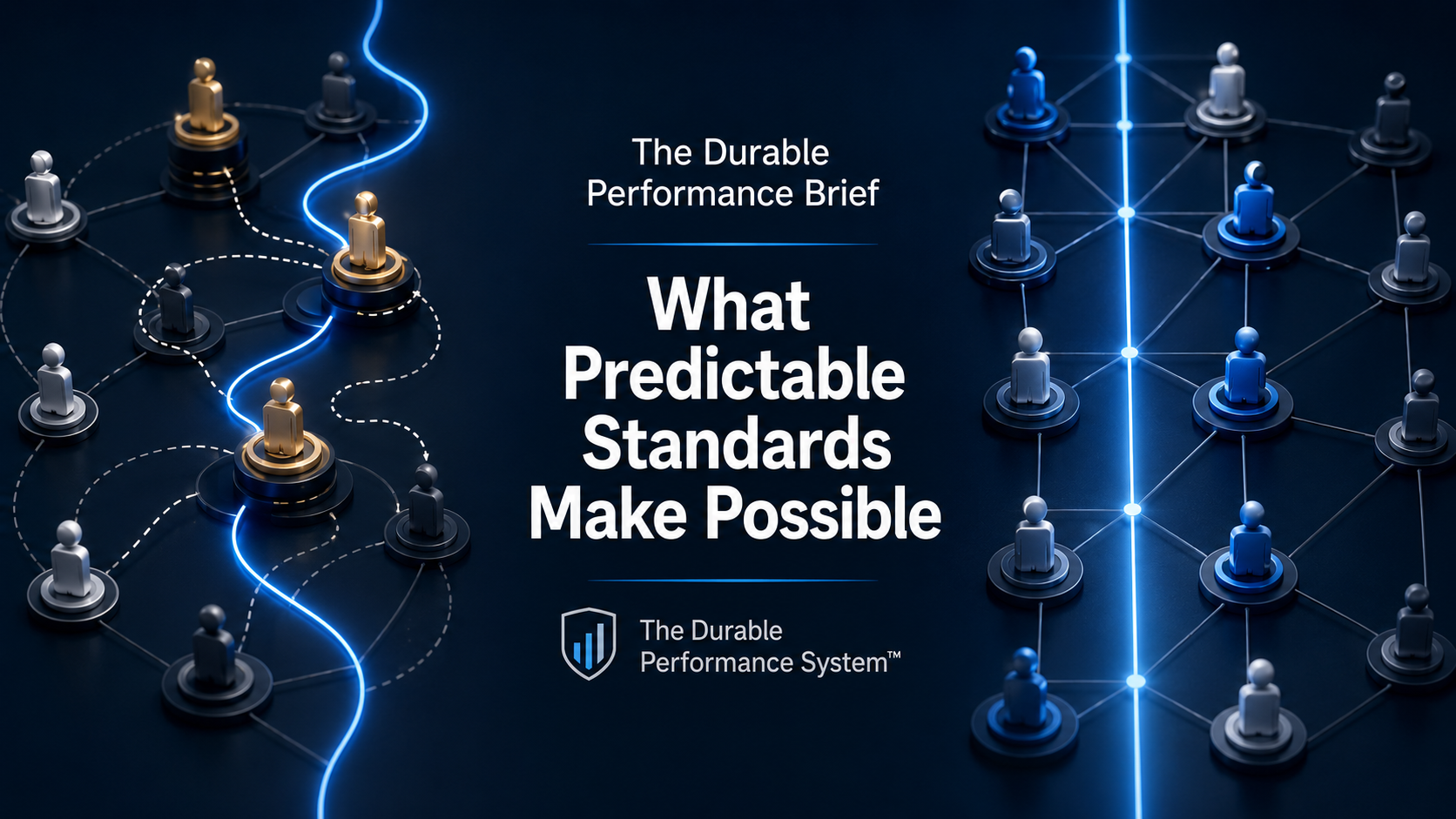
That is what predictable standards make possible:
less politics,
less interpretation,
stronger managers,
cleaner accountability,
and greater trust in the system itself.
Question for readers: Which standard in your organization sounds clearer than it actually behaves?
Next Wednesday: What leaders are actually responsible for.
Part of The Durable Performance System™
Books, field guides, and frameworks on power, incentives, authority, accountability, and execution.
Published every Wednesday morning.
Curtisstoaks.com – YouTube – @curtisstoaksauthor